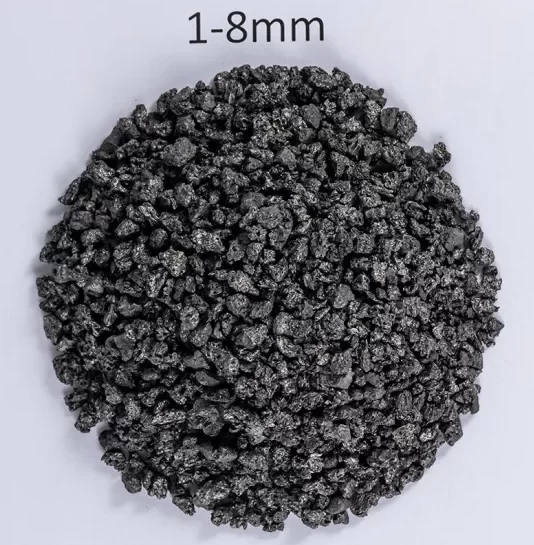
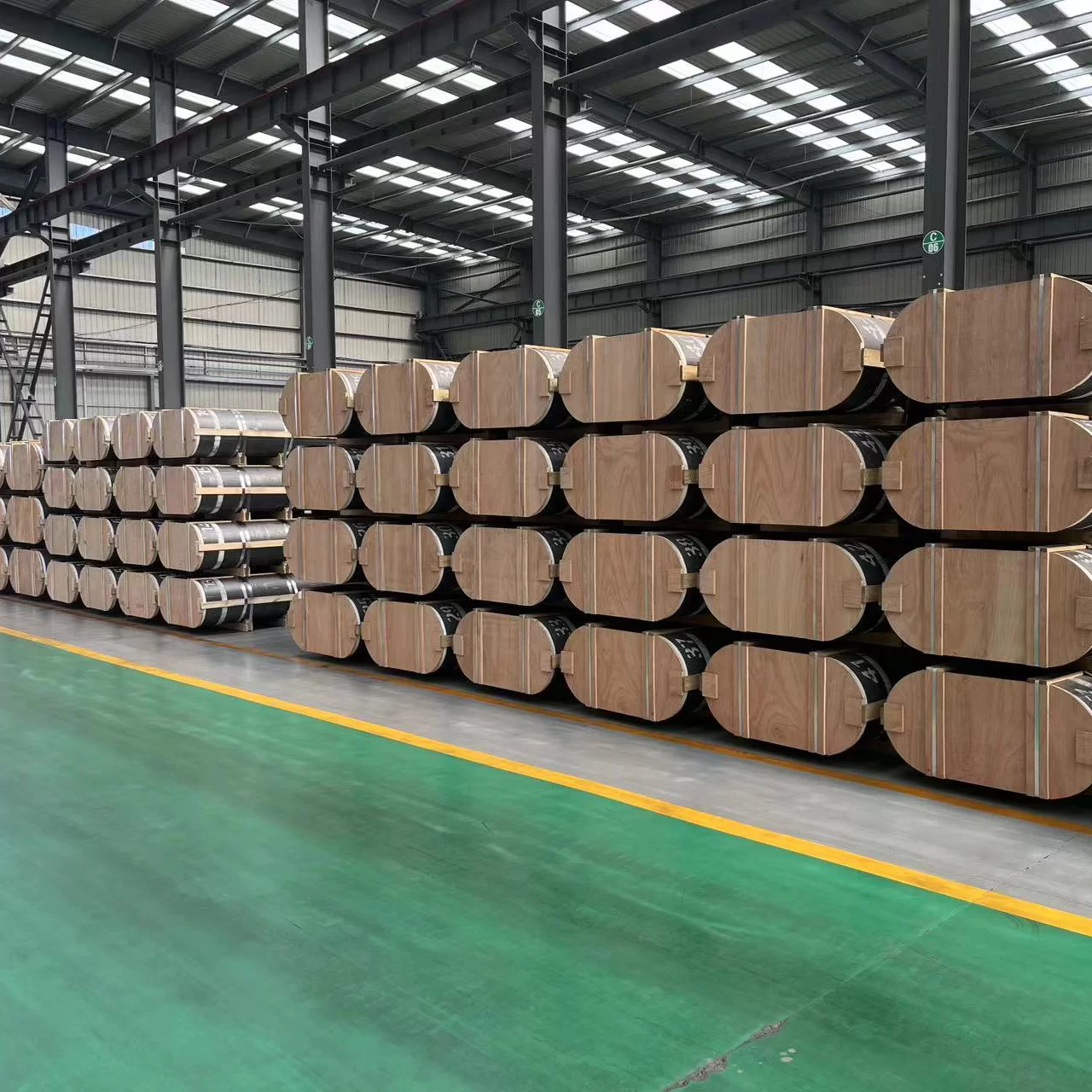
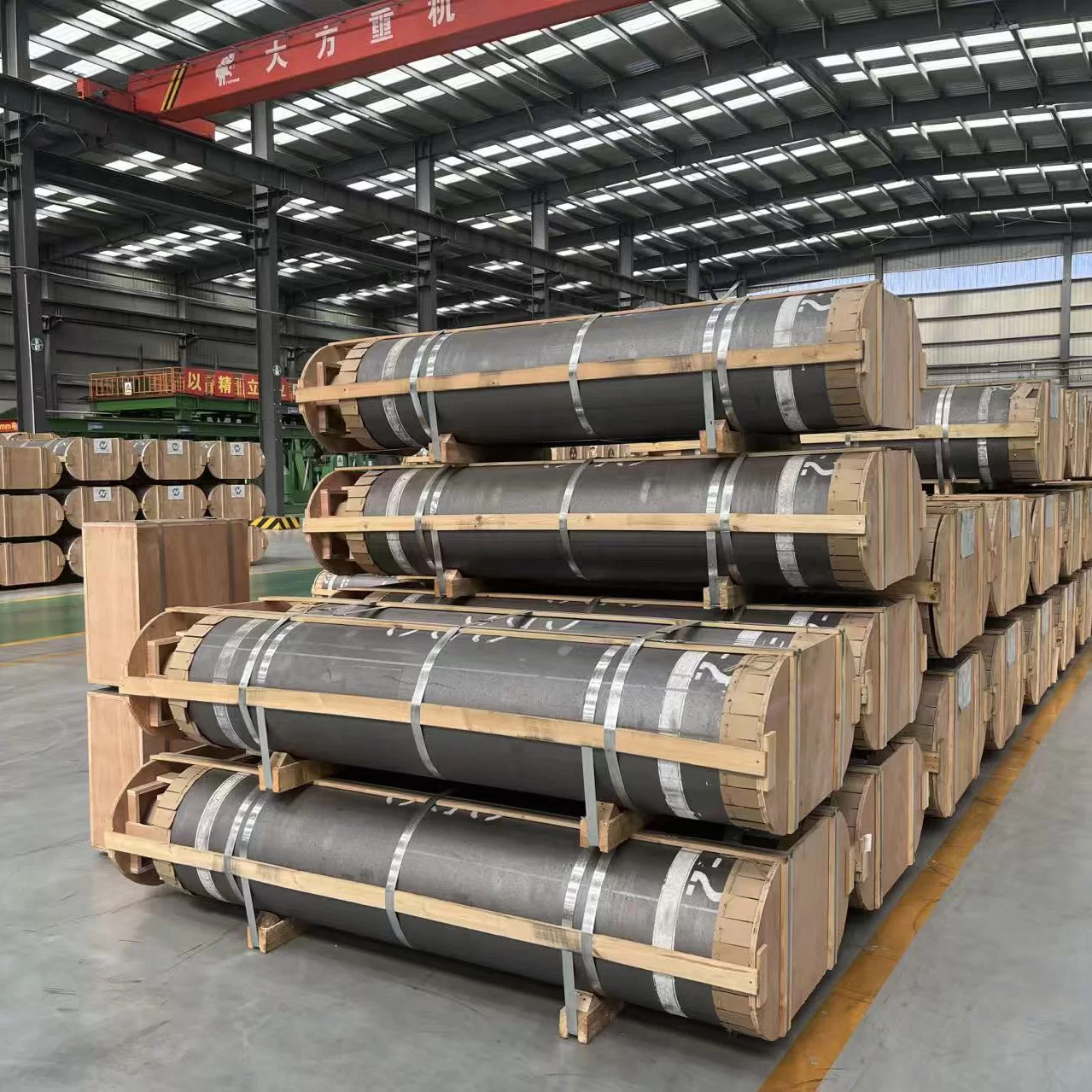
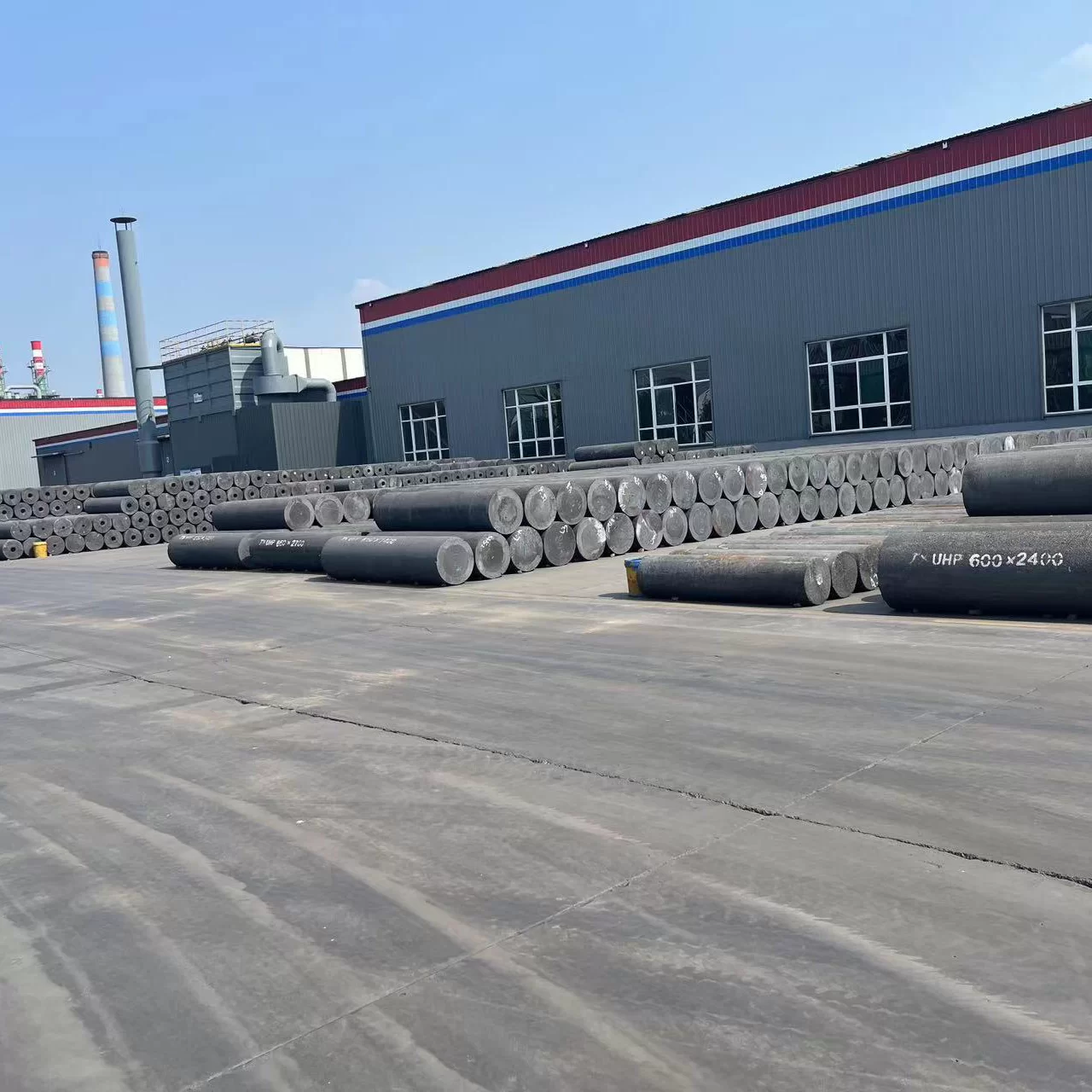
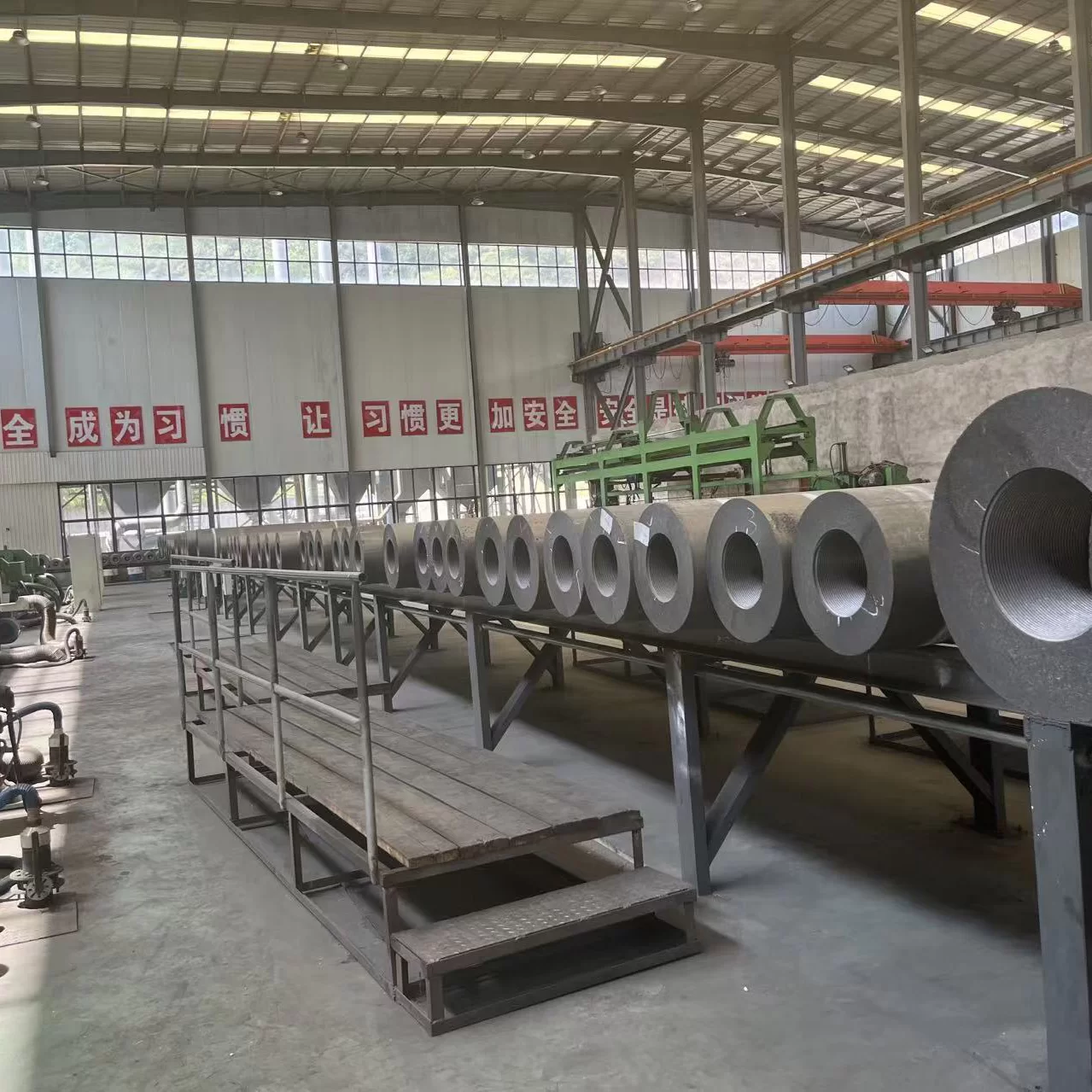
Graphite blocks are widely used in high-temperature, chemical, metallurgical, and industrial applications because graphite combines excellent thermal stability, electrical conductivity, machinability, and resistance to many corrosive environments.
However, not all graphite blocks are the same. Different manufacturing processes, raw materials, grades, densities, and structures can produce graphite blocks with very different performance characteristics.
Understanding the types and uses for graphite blocks can help engineers, manufacturers, and industrial buyers select the right material for their specific operating conditions.
Ding An Heng provides graphite materials for industrial applications, with graphite blocks available for applications requiring controlled physical properties, high-temperature resistance, and reliable machining performance.
What Is a Graphite Block?
A graphite block is a solid piece of engineered graphite manufactured in a defined shape and size. Depending on its intended application, it can be produced by forming carbon-based raw materials and then undergoing processes such as baking, impregnation, graphitization, and machining.
Graphite blocks can be supplied as standard rectangular blocks or machined into custom components.
Unlike many conventional materials, graphite maintains useful properties at extremely high temperatures in suitable atmospheres. It also offers relatively low thermal expansion, good thermal conductivity, and excellent machinability.
These characteristics make graphite blocks useful in:
High-temperature furnaces
Metallurgical equipment
Heat-treatment systems
Semiconductor manufacturing
Chemical processing
Electrical applications
Glass and ceramic production
EDM and precision machining
Custom industrial components
The correct grade depends on the temperature, atmosphere, mechanical load, electrical requirements, and chemical environment.

Types of Graphite Blocks
Graphite blocks can be classified in several ways, including by raw material, manufacturing process, structure, and application.
1. Molded Graphite Blocks
Molded graphite is produced using a forming process that gives the material its basic block shape. It can offer good dimensional stability and is available in different grades and densities.
Molded graphite blocks are commonly used for general industrial components, furnace parts, and applications where machinability and thermal performance are required.
Their properties can vary according to particle size, forming pressure, raw material, and subsequent heat treatment.
2. Extruded Graphite Blocks
Extruded graphite is manufactured by forcing a carbon-based material through a die to create a continuous shape.
This process can produce long graphite sections and is useful when the application requires consistent cross-sectional dimensions.
Extruded graphite may be used for:
Furnace components
Heating elements
Electrodes
Industrial structural parts
Thermal processing equipment
Because extrusion can create directional properties, engineers should consider the orientation of the material when designing components for demanding applications.
3. Isostatic Graphite Blocks
Isostatic graphite is manufactured using cold isostatic pressing. The process applies pressure more uniformly, allowing manufacturers to produce graphite with relatively uniform properties in different directions.
Fine-grain isostatic graphite is often selected for applications requiring high purity, precise machining, and consistent performance.
Typical applications include semiconductor processing, EDM components, high-temperature furnace parts, and specialized tooling.
4. Fine-Grain Graphite Blocks
Fine-grain graphite uses smaller carbon particles to create a more homogeneous material structure.
Compared with coarse-grain grades, fine-grain graphite can provide advantages for applications requiring detailed machining, tighter surface finishes, or more uniform material properties.
This type of graphite is commonly considered for precision industrial components and applications where surface quality is important.
5. Impregnated Graphite Blocks
Graphite blocks can also be impregnated with materials such as resin to modify certain properties.
Impregnation can help reduce porosity and improve resistance to penetration by liquids or gases. Resin-impregnated graphite is therefore used in certain chemical processing and heat-exchange applications.
The impregnation material should be selected according to the operating temperature and chemical environment.
Main Uses for Graphite Blocks
The broad range of graphite properties makes graphite blocks useful across multiple industries.
Graphite Blocks for High-Temperature Furnaces
One of the most common uses for graphite blocks is in high-temperature equipment.
Graphite can withstand very high temperatures when the surrounding atmosphere is properly controlled. It also has good thermal conductivity and relatively low thermal expansion.
Depending on the furnace design, graphite blocks can be machined into:
Furnace supports
Heating components
Liners
Trays
Crucible components
Insulating or structural parts
Material purity and oxidation resistance are especially important when graphite is exposed to high temperatures.
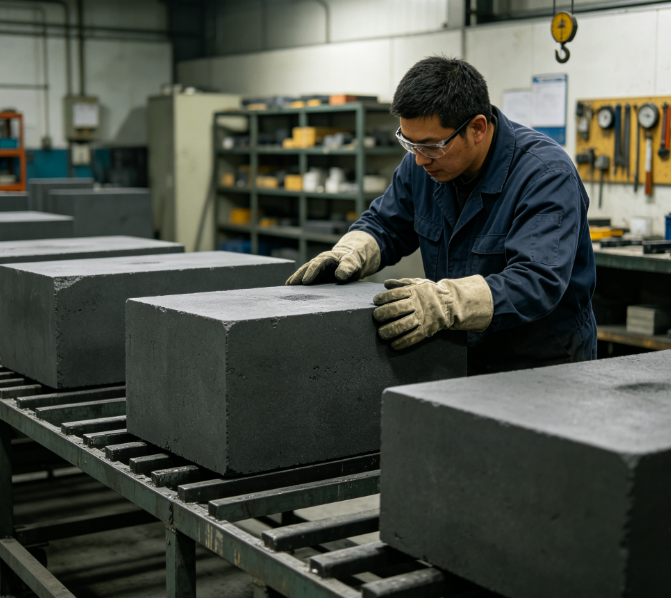
Graphite Blocks in Metallurgy
Graphite is widely used in metallurgical processes because of its high-temperature performance.
Graphite blocks can be incorporated into molds, dies, furnace components, and other equipment used for processing metals.
For applications involving molten metals, engineers need to consider factors such as graphite density, porosity, purity, thermal shock resistance, and compatibility with the specific metal or alloy.
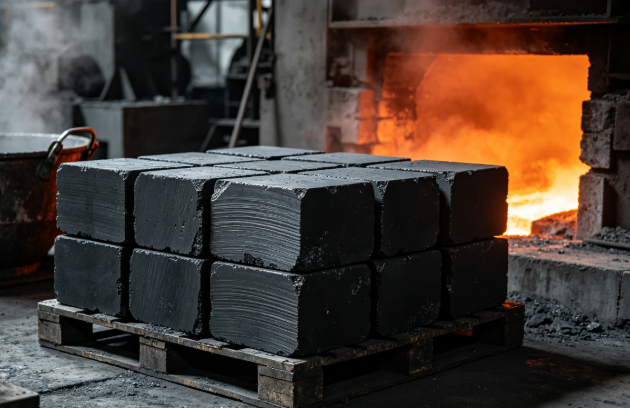
Graphite Blocks for Chemical Processing
Certain graphite grades are suitable for chemical processing because graphite has strong resistance to many chemical environments.
Impermeable or impregnated graphite can be used in equipment such as heat exchangers, reaction vessels, and other components exposed to corrosive media.
However, chemical compatibility depends on the graphite grade, impregnation material, temperature, concentration, and specific chemical involved.
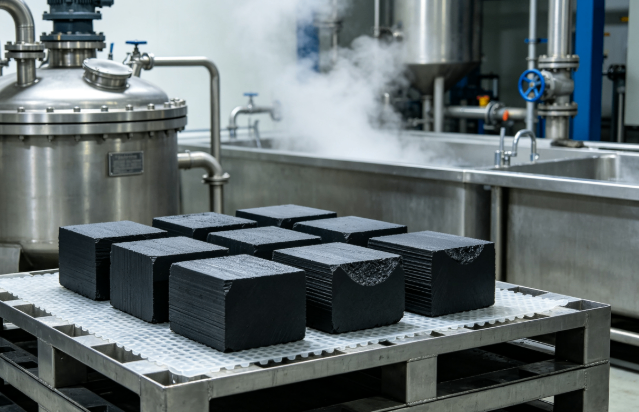
Graphite Blocks in Semiconductor Manufacturing
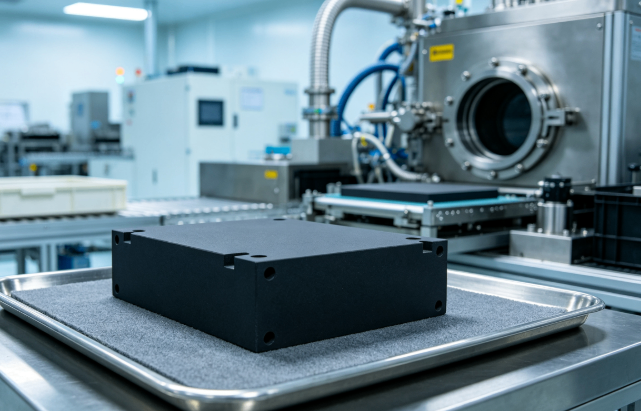
High-purity graphite plays an important role in semiconductor and related high-temperature manufacturing processes.
Graphite components may be used as susceptors, heating components, carriers, and other furnace parts.
For these applications, purity and contamination control are critical. Fine-grain and high-purity graphite grades are often considered where strict process requirements apply.
Graphite Blocks for EDM
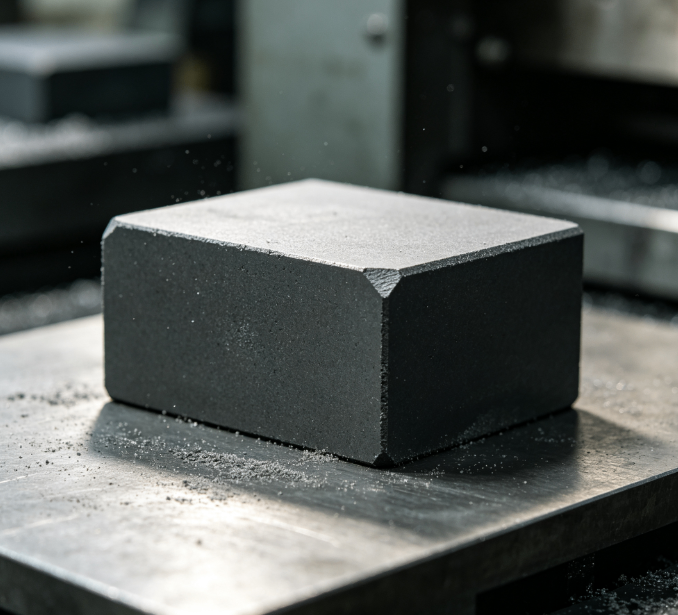
Graphite is also used as an electrode material in electrical discharge machining (EDM).
Graphite's electrical conductivity and machinability allow manufacturers to produce complex electrode geometries relatively efficiently.
For EDM applications, material structure, grain size, strength, electrical properties, and machining requirements should all be considered.
Graphite Block Types and Applications at a Glance
| Graphite Block Type | Typical Characteristics | Common Applications |
|---|---|---|
| Molded graphite | Versatile, machinable | Furnace parts, industrial components |
| Extruded graphite | Directional structure, continuous profiles | Electrodes, furnace components |
| Isostatic graphite | Uniform structure and properties | Semiconductor, precision tooling |
| Fine-grain graphite | Smooth machining and homogeneous structure | Precision components, EDM |
| Impregnated graphite | Reduced permeability | Chemical equipment, heat exchangers |
The table provides general guidance. Actual performance depends on the specific graphite grade and manufacturing specification.
How to Choose the Right Graphite Block
Choosing a graphite block should begin with the operating environment rather than the shape alone.
Temperature is one of the first factors to evaluate. The maximum operating temperature and heating cycle can influence the appropriate graphite grade.
Purity is important for semiconductor, laboratory, and other contamination-sensitive applications.
Density and porosity affect mechanical strength, permeability, thermal behavior, and chemical resistance.
Grain size should also be considered. Fine-grain graphite may be more appropriate for detailed machining, while other grades may be better suited to larger structural components.
Finally, consider the machining requirements. If the graphite block needs to become a complex custom component, the material must provide suitable machinability and dimensional stability.
Custom Graphite Blocks for Industrial Applications
Standard graphite blocks are useful for many applications, but industrial equipment often requires customized dimensions or machined geometries.
A graphite manufacturer can produce blocks according to drawings, dimensions, tolerances, material grade, density, purity, and other technical requirements.
Ding An Heng can support customers looking for graphite materials for different industrial applications by matching graphite grades with the required working conditions.
When requesting a quotation, buyers should provide as much technical information as possible, including:
Block dimensions
Graphite grade
Required purity
Density
Grain size
Operating temperature
Working atmosphere
Chemical exposure
Machining requirements
Expected quantity
Providing these details helps suppliers recommend a suitable graphite material and production method.
Conclusion
The types and uses for graphite blocks vary widely depending on graphite structure, manufacturing method, purity, density, and application requirements.
Molded, extruded, isostatic, fine-grain, and impregnated graphite blocks can each serve different industrial purposes. From high-temperature furnaces and metallurgy to chemical processing, semiconductor manufacturing, and EDM, graphite remains an important engineering material for demanding environments.
For industrial buyers, selecting a graphite block should go beyond comparing dimensions and prices. The material's purity, grain size, density, thermal properties, chemical compatibility, and machining requirements should all be evaluated against the actual operating conditions.
With the right grade and manufacturing process, graphite blocks can be engineered into reliable components for high-temperature and specialized industrial applications. Ding An Heng can provide graphite material solutions tailored to different technical and manufacturing requirements.