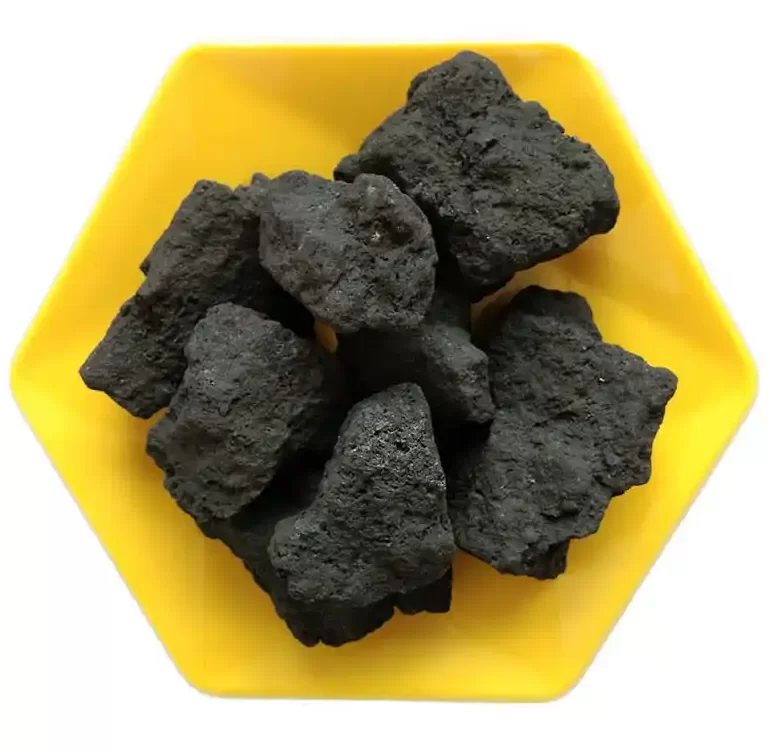
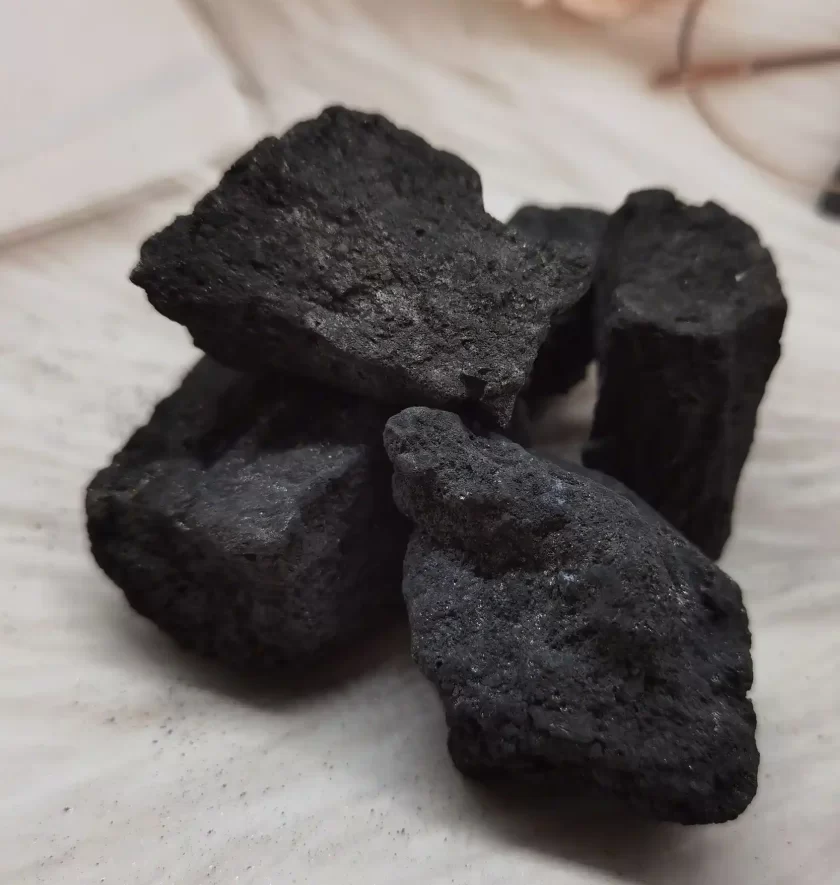
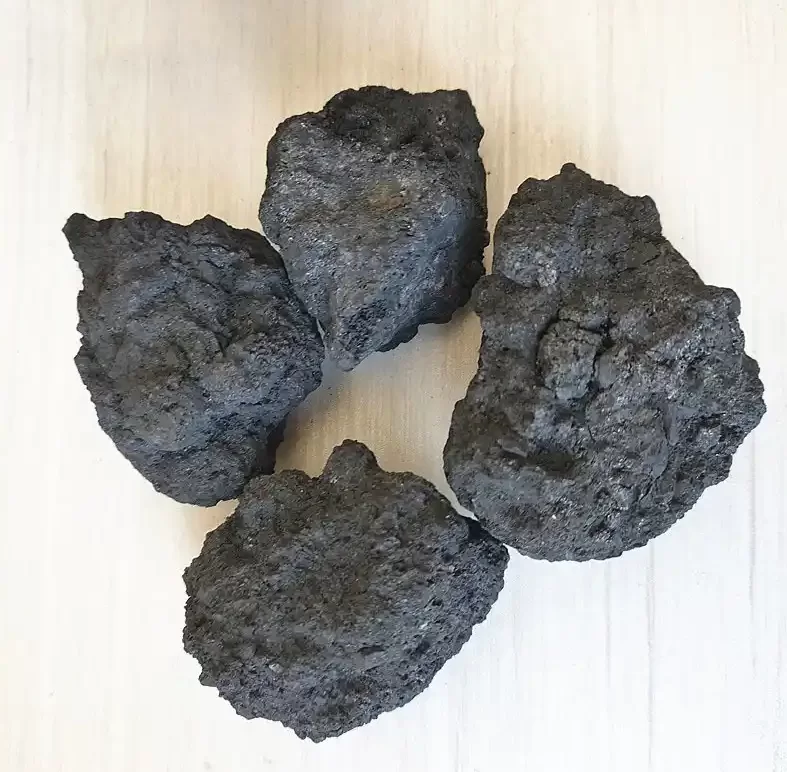
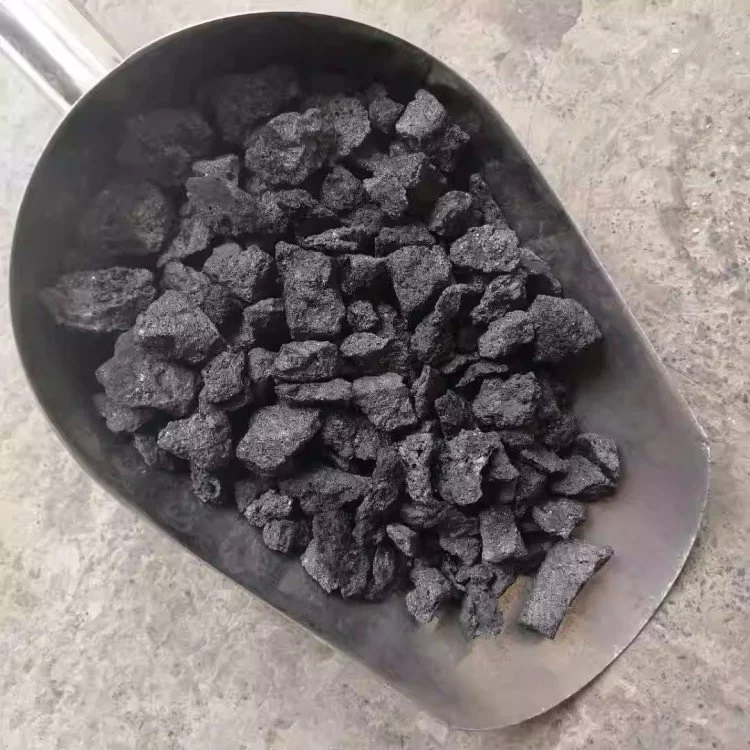
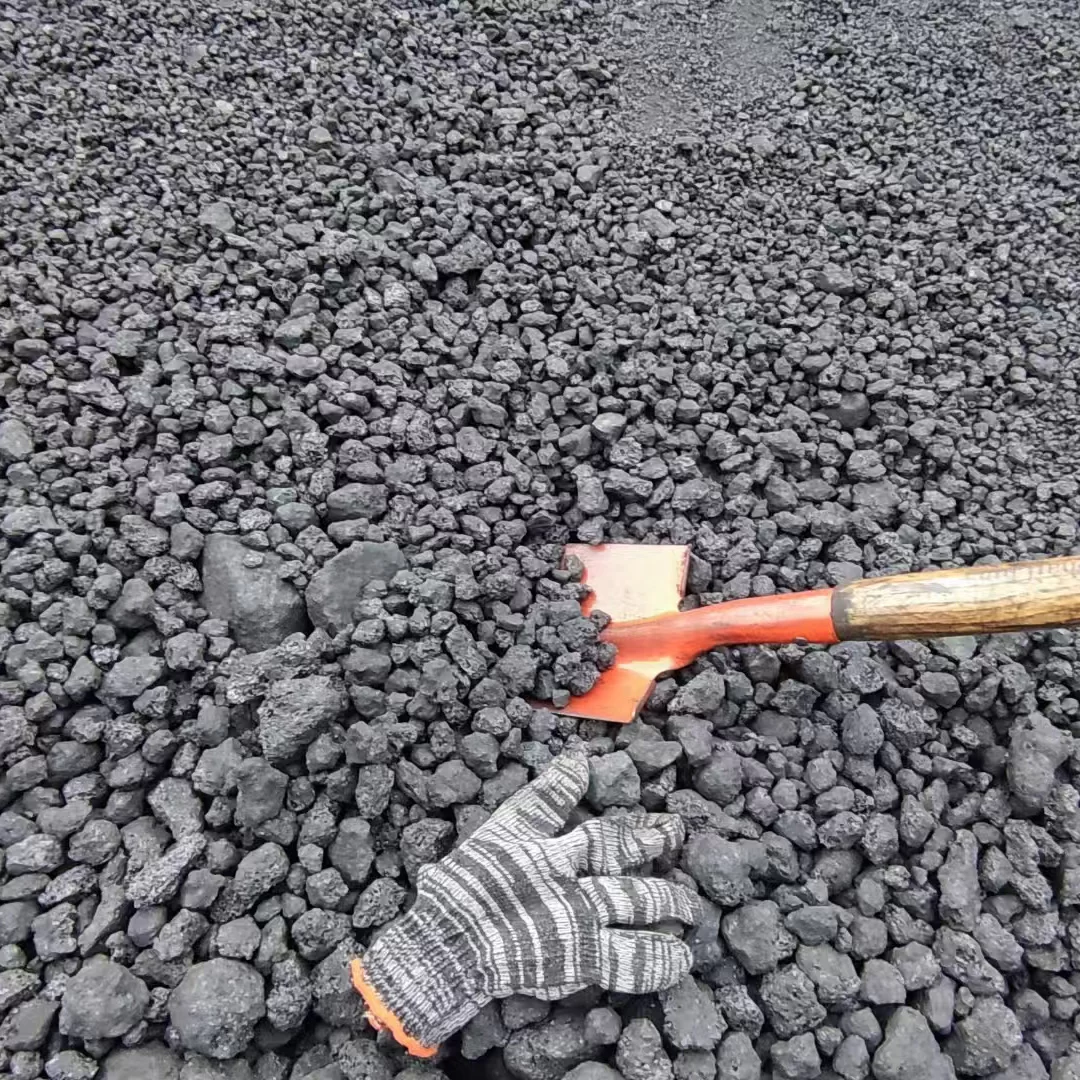
Description
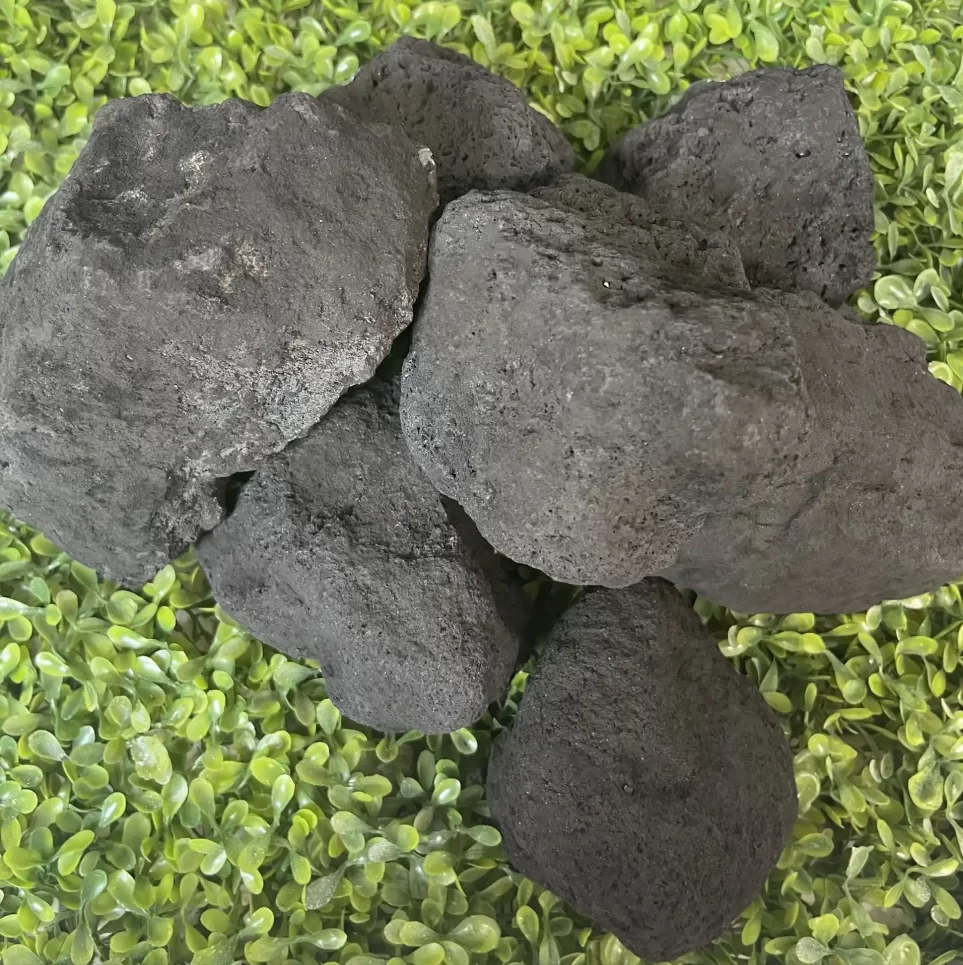
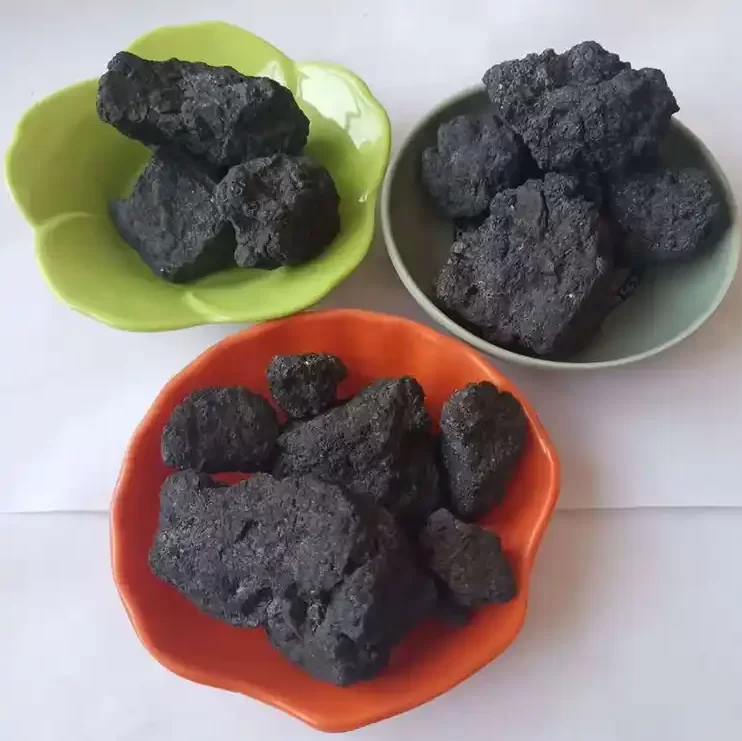
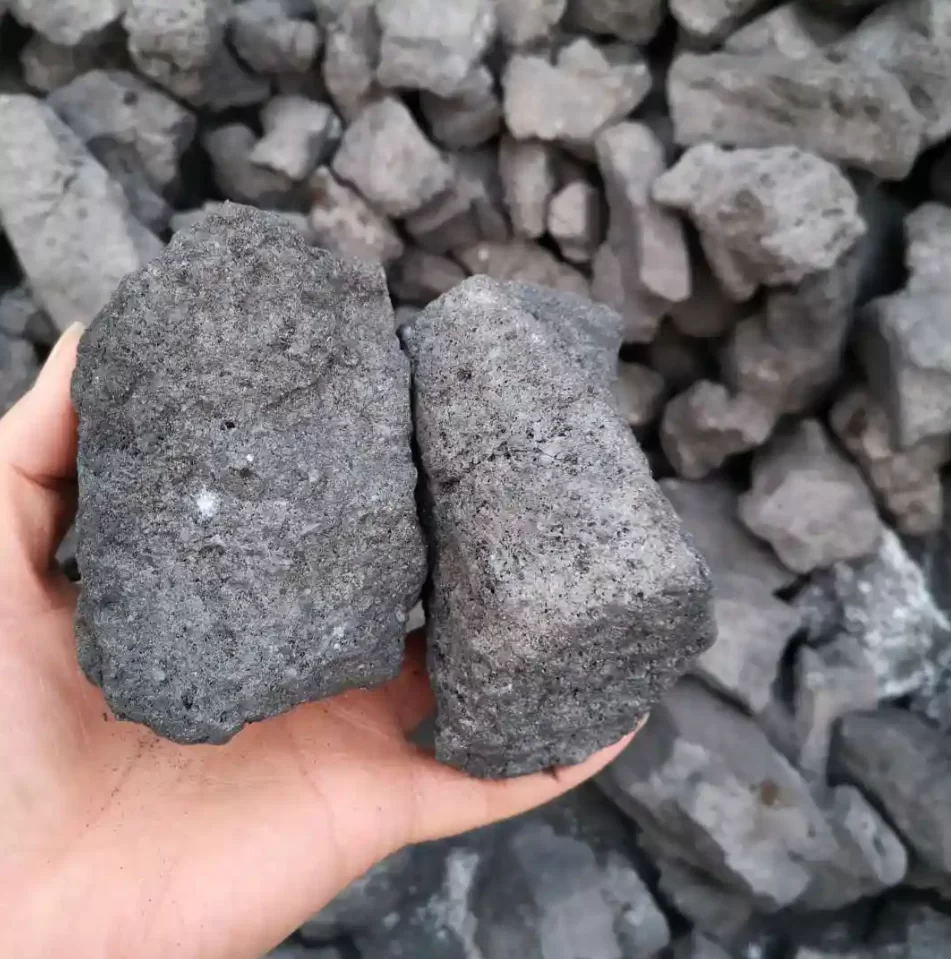
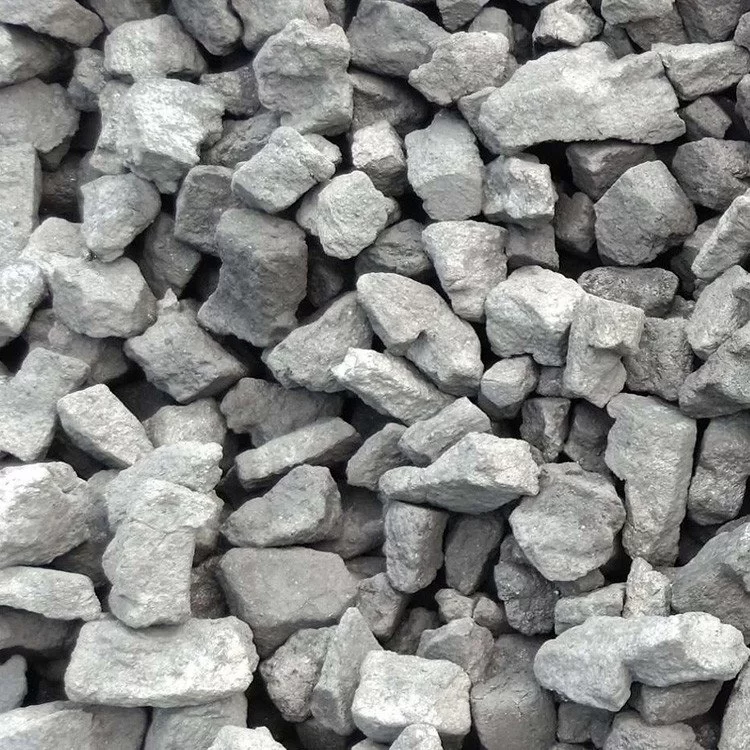
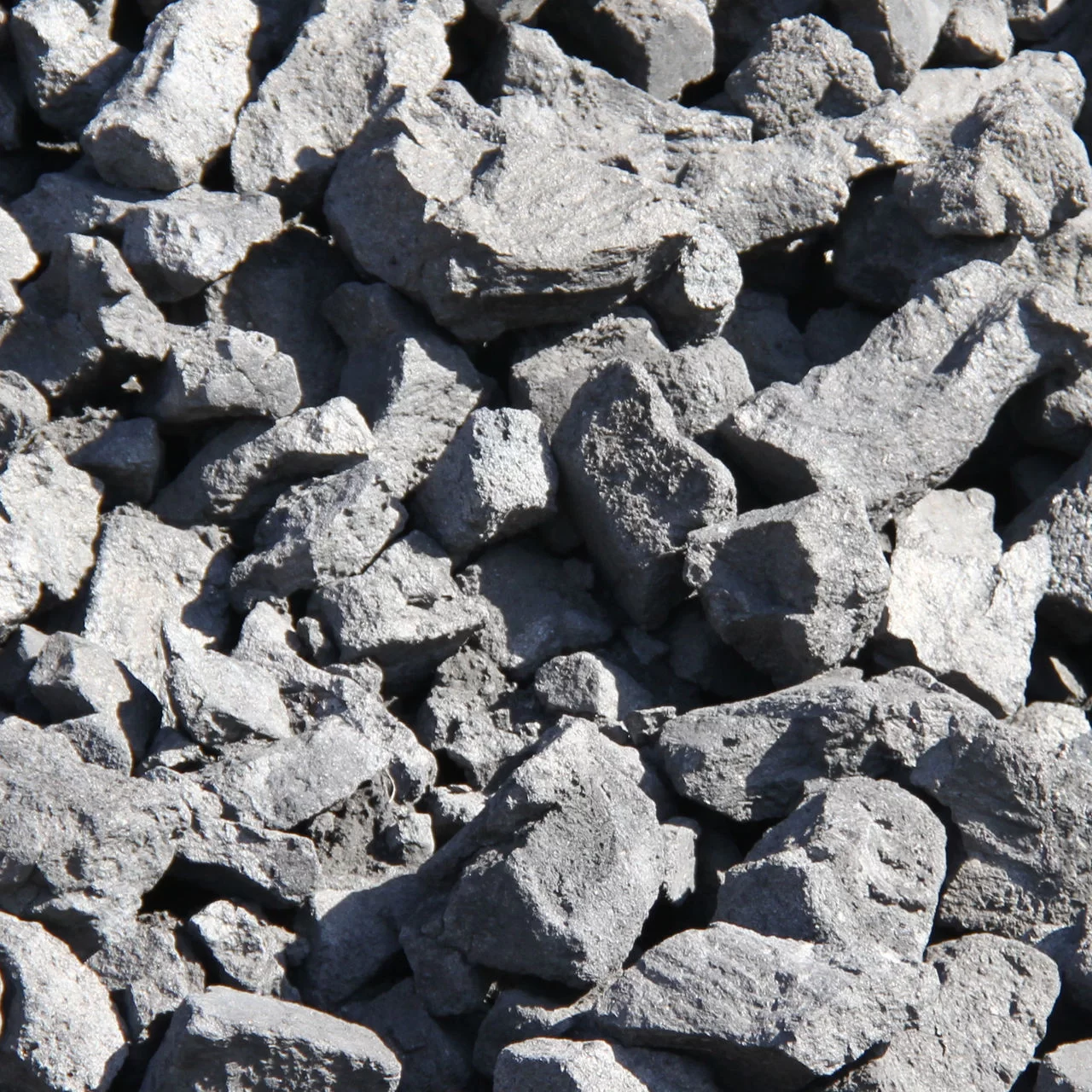
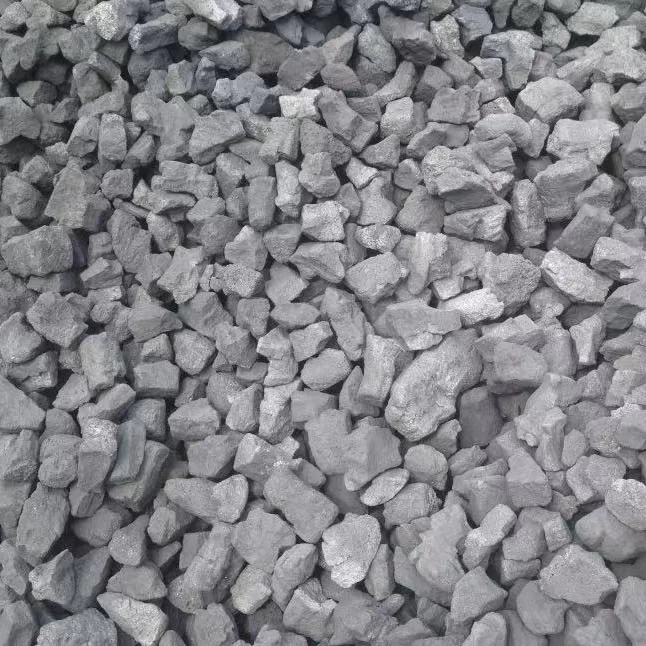
Foundry Coke is made from a mixing material of several kinds of coal, under a high temperature(1300℃) process. They are widely used for steelmaking, ferroalloys manufacture or non-ferrous metals smelting, iron castings manufacture or other related metallurgical and foundry industry, because of its special physical and chemical characteristics: high strength and fixed carbon content, low sulfur and low volatile matter content.
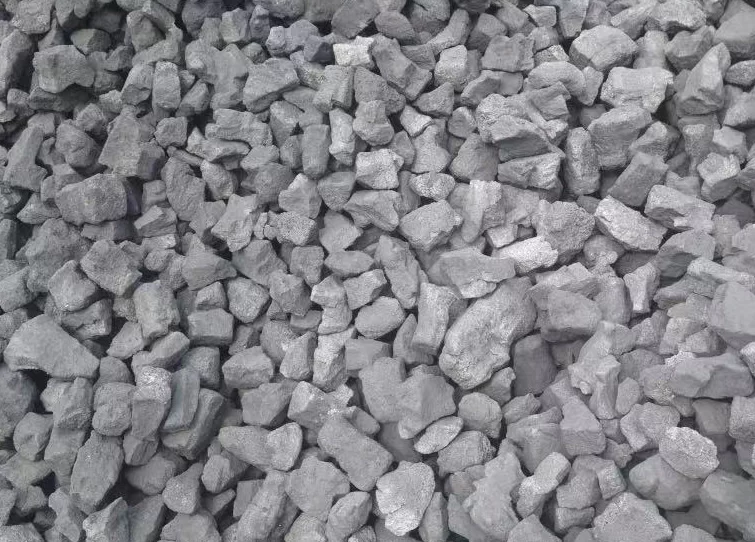
Applications
Foundry Coke is the main fuel of the Cupola melting iron. It can be melted charge and molten steel overheating, the support column to maintain its good air permeability. Therefore, my company to provide foundry coke with large blocks, low reactivity, low abrasive resistance , with enough impact crushing strength, low ash and sulfur.
Range of use:Carbon additive manufacture,Steel making,casting steel plants,chemical industries,refractories.
Foundry coke is widely used in ironmaking due to its special physical and chemical properties. It is the main cupola iron molten fuel. Foundry coke is the main fuel for melting iron in the furnace. It can melt the material, make the iron reach a great heat, and maintain good air permeability by maintaining the material column. Therefore, foundry coke has the characteristics of large size, low reactivity, low porosity, sufficient impact strength and crushing strength, low ash and sulfur content. It is very popular in the international market.
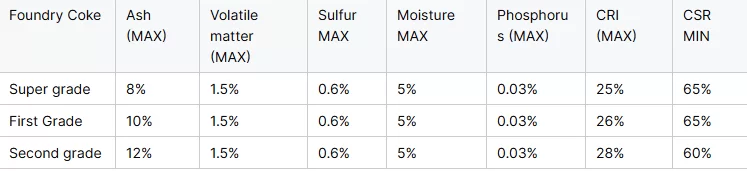
Key Characteristics
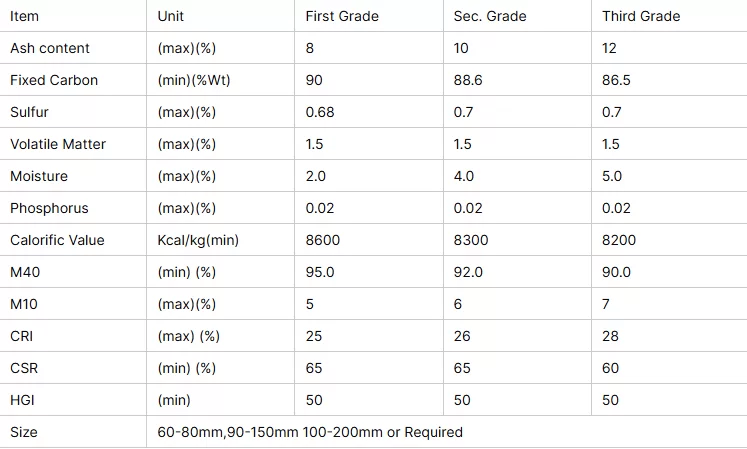
What Is Foundry Coke
Understanding Foundry Coke Meaning and Foundry Coke Production at 1300℃
Foundry coke is a carbon-based solid fuel produced by processing a blended raw coal material through a high-temperature carbonization process. For foundry and metallurgical applications, the production route is important because the resulting coke needs to provide the physical and chemical characteristics required during high-temperature melting operations. The foundry coke meaning is therefore closely related to its role as a strong carbonaceous fuel and supporting material in foundry processes rather than simply referring to ordinary coal-derived fuel.
The production process begins with raw coal blending. Several kinds of coal are mixed as the starting material before entering the high-temperature process. This blending step provides the basis for obtaining the required characteristics of the finished coke for foundry applications. The selected coal materials are processed together rather than treating the final coke as a single raw-coal product. For purchasers, understanding this production route is useful when evaluating the consistency and suitability of material for industrial melting operations.
The next important stage in foundry coke production is high-temperature carbonization at approximately 1300℃. Under this high-temperature process, the blended coal is converted into coke with the physical and chemical characteristics required for demanding metallurgical and foundry applications. The process is particularly relevant to buyers who need a carbonaceous material capable of operating in high-temperature environments.
It is also useful to distinguish foundry coke from products such as metallurgical coke and semi coke when evaluating material selection. Metallurgical coke and semi coke can belong to the wider family of carbon-based industrial materials, but the selection of foundry coke should be based on the requirements of the intended foundry or metallurgical process. For procurement teams, reviewing the production method together with the physical and chemical characteristics provides a more practical basis for evaluating material suitability.
How Foundry Coke Uses Relate to the Cupola Furnace Coke Bed
One of the most important foundry coke uses is as the main fuel for cupola furnace iron melting. In this application, coke does more than simply provide heat. It also contributes to the structure of the material column inside the furnace, helping maintain the air permeability required during operation. This makes the physical strength and size characteristics of the coke particularly important when selecting material for foundry applications.
The cupola furnace coke bed is an important part of this operating environment. A stable coke bed needs to withstand the mechanical conditions inside the furnace while supporting the material column. Foundry coke with high strength and sufficient impact and crushing strength is therefore suitable for applications where the coke must maintain its physical integrity during handling and furnace operation. The supplied product is described as having large blocks together with sufficient impact crushing strength, characteristics associated with its intended foundry application.
Another important function is heat generation. Coal and coke for sale serves as the main fuel for melting iron in the furnace, providing the high-temperature environment required to melt the charge and bring the iron to the required heat. At the same time, maintaining the material column helps support good air permeability. These combined functions explain why coke selection can influence the operating conditions of a cupola furnace.
Beyond iron casting, the stated foundry coke uses include carbon additive manufacture, steelmaking, casting steel plants, chemical industries and refractories. It is also used in ferroalloy manufacture and non-ferrous metal smelting. These applications share a requirement for carbon-based material capable of supporting industrial high-temperature processes.
For procurement teams, application should remain the starting point when comparing materials. Rather than selecting solely according to a general coke category, buyers can evaluate whether the material's strength, fixed-carbon content, sulfur level, ash level, volatile matter and physical form correspond to the requirements of the intended process. This approach makes the foundry coke uses more directly connected to practical material selection and helps ensure that the selected product matches the operating environment.
Reading a Foundry Coke Specification Through Carbon Content, Strength and Purity
A foundry coke specification should be considered from both physical and chemical perspectives because foundry operations place simultaneous demands on the material's strength, carbon content and composition. The product is characterized by high fixed-carbon content and high strength, together with low sulfur and low volatile matter. These characteristics are central to evaluating whether foundry coke is suitable for industrial melting and related metallurgical processes.
Fixed carbon is one of the key chemical characteristics. A high fixed-carbon content supports the role of the material as a carbonaceous fuel in high-temperature applications. For foundry operations, this characteristic is particularly relevant because the coke is used as the main fuel for cupola furnace iron melting. Buyers reviewing a foundry coke specification should therefore pay attention to fixed-carbon performance rather than evaluating the product only by its visual appearance or general material category.
Mechanical strength is equally important. The product is described as having high strength, sufficient impact crushing strength and crushing strength for its intended applications. These physical characteristics matter during transportation, handling and furnace operation because the coke needs to retain an appropriate physical structure. Large blocks and adequate resistance to breakage are particularly relevant when the material is used in a cupola furnace coke bed.
Chemical purity is another major consideration. The product is characterized by low sulfur, low ash and low volatile matter. These characteristics are directly relevant to buyers looking for a carbonaceous material for foundry and metallurgical applications. Low sulfur and low ash are specifically identified among the product's important characteristics, while low volatile matter forms part of the stated chemical profile.
Specification
focus | Product
characteristics described |
Carbon
content | High
fixed carbon |
Mechanical
performance | High
strength |
Impact
performance | Sufficient
impact crushing strength |
Crushing
performance | Sufficient
crushing strength |
Sulfur | Low
sulfur |
Ash | Low ash |
Volatile
matter | Low
volatile matter |
Physical
form | Large
blocks |
Reactivity | Low
reactivity |
Porosity | Low
porosity |
Manufacturing
process | High-temperature
process at 1300℃ |
This information gives procurement teams a practical framework for reviewing the foundry coke specification before discussing order requirements. Instead of treating price as the only purchasing consideration, the material should be assessed according to the physical and chemical characteristics required by the intended process.
Choosing Foundry Coke Suppliers Based on Product Fit and Foundry Coke Prices
Selecting foundry coke suppliers for an industrial project requires more than identifying a material listed simply as coke. The intended application, material characteristics, available size requirements, packaging method and shipment arrangement all need to be considered together. For purchasers evaluating foundry coke for sale, the product's stated characteristics provide a starting point for determining whether it fits the requirements of a casting or metallurgical operation.
The product is intended for a range of industrial applications, including iron castings manufacture, steelmaking, ferroalloy manufacture, non-ferrous metals smelting, carbon additive manufacture, chemical industries and refractories. Because the operating requirements can differ between these applications, buyers should first identify the actual use before comparing foundry coke suppliers. A material suitable for one process should not automatically be treated as suitable for every application.
The physical and chemical characteristics should then be reviewed. High fixed-carbon content and high strength are among the core characteristics of the product. Low sulfur, low ash and low volatile matter are also stated characteristics. For foundry applications involving cupola furnaces, the product is additionally described as having large blocks, low reactivity, low porosity and sufficient impact and crushing strength.
Foundry coke prices can be evaluated more effectively when the material specification and order requirements are clearly established. Buyers searching for a foundry coke price should consider the specific product requirements rather than assuming that all coke products have the same cost structure. Size requirements, quantity, packaging and shipping arrangements can affect the commercial quotation for an industrial order. Therefore, obtaining a quotation based on actual purchasing requirements provides a more useful comparison than relying on a generic market figure.
The supplied product is manufactured from a mixture of several kinds of coal through a 1300℃ high-temperature process. This production information, together with the stated physical and chemical characteristics, gives buyers a clearer basis for discussing material requirements. Instead of selecting foundry coke for sale based only on a listed price, procurement teams can compare the product's characteristics against the operating requirements of their own facilities.
In practical purchasing, the most useful comparison is therefore between the required application and the actual product characteristics. Once the required coke type, physical characteristics, size and shipment arrangement are established, discussions about foundry coke prices become more meaningful and commercially relevant.
Planning Foundry Coke for Sale Orders: Specification, Packaging and Shipment Considerations
When purchasing foundry coke for sale for an industrial project, order planning should begin with the required material characteristics and application. The product is intended for foundry and metallurgical industries, including iron casting, steelmaking, ferroalloy manufacture and non-ferrous metal smelting. Establishing the intended use first helps purchasers communicate the appropriate requirements when discussing product quantity, size and delivery arrangements with foundry coke suppliers.
Size is particularly important for foundry applications because the product is described as having large blocks and sufficient impact and crushing strength. In a cupola furnace, the coke participates in the furnace material column and serves as the main fuel for melting iron. Maintaining suitable physical form is therefore relevant to the intended application. Buyers should confirm the required size range and product specification before finalizing an order.
Granularity can also be discussed according to the requirements of the project. If a particular particle-size range is needed, the buyer should communicate the required grade when requesting product information and quotation. This is especially useful when the material will be introduced into an established furnace or production process where the physical characteristics of the charge need to correspond with existing operating practices.
The foundry coke specification should remain the reference point throughout the purchasing process. Important characteristics described for the product include high fixed carbon, high strength, low sulfur, low ash and low volatile matter. The product is also described as having low reactivity, low porosity and sufficient impact and crushing strength. Reviewing these characteristics together allows purchasers to assess the product more systematically.
The product's role in industrial melting makes accurate specification communication particularly important. Whether the intended application is iron casting, steelmaking, ferroalloy manufacture, non-ferrous metal smelting or another stated use, the purchasing process should connect the final order with the actual operating requirements. This approach helps make foundry coke for sale inquiries more precise and gives both purchaser and supplier a clearer basis for discussing the appropriate material and delivery arrangement.
Foundry Coke Meaning: What Exactly Are You Buying?
In global metallurgical sourcing, foundry coke is not simply "coke used in a foundry." It is an engineered, high-carbon fuel specifically formulated to withstand the extreme thermal and mechanical demands of cupola melting operations.
Unlike blast furnace metallurgical coke, true foundry coke requires:
Larger lump sizing (80–150 mm)
Thicker pore cell walls
High shatter resistance (M40 ≥ 82%)
Ultra-low chemical reactivity to prevent premature degradation during burden descent
Carbon Material Distinction: Avoid Costly Substitution
| Carbon Material Type | Primary Application | Key Differentiating Characteristic | Can It Replace Foundry Coke in Cupolas? |
|---|---|---|---|
| Foundry Coke | Cupola furnace iron melting | Large lump size (80–150 mm), M40 ≥ 82%, low reactivity | ✅ Yes (Industry Standard) |
| Metallurgical Coke | Blast furnace ironmaking | Smaller lump size (25–80 mm), high reactivity | ❌ No (Chokes blast; collapses under iron burden) |
| Petroleum Coke | Anodes, power generation, cement | Low ash, volatile-rich, near-zero structural strength | ❌ No (Zero load-bearing capability; sulfur > 3.0%) |
| Calcined Pet Coke | Carbon additive in steelmaking | High carbon purity (> 98.5%), granular/powdered | ❌ No (Melting additive only; cannot build coke beds) |
| Recarburizers | Ladle / induction furnace adjustment | Fast dissolution in molten bath (1–5 mm) | ❌ No (Additive material; non-load bearing) |
Procurement Rule: Always issue your commercial RFQ based on verified physical and chemical metrics rather than the generic trade term "foundry coke."
Why the Cupola Furnace Coke Bed Matters for Efficient Iron Melting
The cupola furnace coke bed is the thermal, physical, and chemical engine of the melting process. Unlike induction furnaces where heat is supplied electrically, the cupola coke bed acts as a load-bearing porous pillar supporting tons of metallic charge while letting air blast pass through.
Three Core Functions
| Function | Description |
|---|---|
| Support Structure | Burden charges (iron + limestone) rest directly upon solid coke columns down to the well |
| Permeability | Blast air injected via tuyeres circulates through interstitial voids between coke lumps, driving continuous molten iron production at 1,500°C |
| Thermal Core | Provides the primary heat required to melt the metallic charge |
Consequences of Substandard Coke Beds
| Problem | Mechanism | Consequence |
|---|---|---|
| Permeability Choke & Pressure Spikes | Mechanically weak coke shatters under burden impact, filling voids with fines (< 25 mm) | Restricts tuyere blast flow; irregular back-pressure |
| Bed Height Drop & Cold Iron | Fast-reacting, porous coke burns down too quickly, depressing bed height | Tap temperatures below 1,420°C; cold-shut casting defects |
| Furnace Bridging Hazards | Unreacted fines combine with acidic slag to form hanging crusts along refractory walls | Halts burden descent; risk of explosive tap-hole blowouts |
How to Choose the Right Foundry Coke for Cupola Operations
Selecting foundry coke for sale requires calculating the Total Melt-Loss Cost rather than comparing initial FOB prices per ton. A cheaper coke with substandard mechanical strength shatters into fines during handling and furnace charging, choking airflow and driving up overall production expenses.
Four Practical Cupola Matching Principles
| Principle | Requirement | Practical Impact |
|---|---|---|
| Stack Height vs. Shatter Strength (M40) | Tall charging stacks require M40 ≥ 82%–85% | Resists crushing weight of heavy pig iron and steel scrap |
| Tuyere Blast Volume vs. Lump Sizing | 100–150 mm maintains permeable void channels | Stable tap temperatures (1,480–1,520°C); reduces coke consumption by 8%–12% |
| Sulfur Control vs. Casting Quality | Ultra-low sulfur (≤ 0.60%) | Prevents hot-shortness and structural embrittlement in ductile and gray iron |
| Batch Consistency | Minimize moisture and ash fluctuation | Prevents sudden bed collapse and refractory bridging; avoids emergency shutdowns |
Ding An Heng calibrates coke specifications to your cupola internal diameter (ID) and target melting capacity, ensuring stable thermal and mechanical performance across continuous production runs.
Foundry Coke Specification: Which Parameters Matter Most?
Professional procurement decisions evaluate both proximate chemical analysis and mechanical drop-test indices. A single percentage deviation in ash or volatile matter disrupts furnace thermal balances.
Standard Chemical & Mechanical Parameter Matrix
| Parameter / Metric | Standard Foundry Grade | Premium Low-Ash Grade | Ultra-Dense Export Grade | Metallurgical Role & Practical Impact |
|---|---|---|---|---|
| Fixed Carbon (FC) | ≥ 86.0% | ≥ 88.0% | ≥ 90.0% | Primary thermal energy source; controls iron carbon pickup |
| Ash Content (A) | ≤ 12.0% | ≤ 10.0% | ≤ 8.5% | Non-combustible mineral waste; low ash saves flux and energy |
| Total Sulfur (S) | ≤ 0.70% | ≤ 0.60% | ≤ 0.50% | Critical impurity; strictly controlled for ductile iron production |
| Volatile Matter (VM) | ≤ 1.5% | ≤ 1.2% | ≤ 1.0% | Verifies complete coking; prevents blast gas irregularities |
| Total Moisture | ≤ 5.0% | ≤ 4.0% | ≤ 3.0% | Water absorbs heat; uniform dry moisture preserves charge weighing |
| M40 (Crushing Strength) | ≥ 80.0% | ≥ 82.0% | ≥ 85.0% | Resistance to shattering under heavy metallic charge pressure |
| M10 (Abrasion Index) | ≤ 8.0% | ≤ 7.0% | ≤ 6.5% | Minimizes air-choking fine dust generation during descent |
Ding An Heng enforces strict quality management, issuing independent laboratory test certificates (SGS, CCIC, or Bureau Veritas) with every 500-ton batch prior to port dispatch.
What Determines Foundry Coke Price and Prices per Ton?
Quoted foundry coke prices reflect complex manufacturing cycles, coal blend costs, and transportation logistics. Comparing price tags without technical context leads to costly buying mistakes.
Five Key Pricing Variables
| Variable | Explanation | Cost Impact |
|---|---|---|
| Premium Coking Coal Sourcing | High-fluidity fat and prime coking coals directly set the raw material cost floor | Base cost |
| Extended 48–72h Coking Cycles | Genuine foundry coke requires slow baking at 1,050–1,100°C for 48–72 hours to form dense cell walls and low reactivity | Rushed carbonization drops costs but yields brittle, fragile coke |
| Precision Screening & Yield Loss | Tightly graded sizes (e.g., 90–140 mm with < 5% undersize) require multi-deck vibrating screens; rejected fractions sold locally at steep discounts | Screening cost + yield loss |
| Export Packaging & Port Logistics | Open breakbulk vessels to containerized 1-ton jumbo bags; waterproof, UV-treated bags prevent moisture uptake and handling breakage | Packaging + ocean freight |
| Market Supply & Demand | Global foundry coke market shifts with casting, machinery manufacturing, and metal processing demand | Spot premium/discount |
Ding An Heng provides quotations according to actual purchasing requirements rather than treating all orders as identical. For buyers comparing foundry coke prices, this specification-based approach makes it easier to evaluate both material suitability and the real delivered cost of each shipment.
How to Evaluate Reliable Foundry Coke Suppliers
Finding reliable foundry coke suppliers is essential for companies that depend on continuous casting operations. When searching for foundry coke for sale, buyers should evaluate suppliers based on more than product availability and price.
Five Supplier Evaluation Criteria
| Criterion | Requirement | Verification Method |
|---|---|---|
| Direct Carbonization Infrastructure | Work with suppliers operating dedicated coking batteries, not trading intermediaries repackaging spot-market coke | Factory audit or video inspection |
| Independent Pre-Shipment Inspection | Supplier agrees to third-party testing (SGS/CCIC) at loading port, verifying sizing, moisture, ash, and shatter metrics before B/L release | Review inspection reports |
| Cross-Border Customs Documentation | Verify fluency in issuing HS Code 2704.00.10, Certificates of Origin (Form E, Form A, CO), and compliant cargo manifest data | Request document samples |
| Container Loading Protection | Heavy industrial packaging requires double-stitched 1,000 kg PP jumbo bags with bottom discharge spouts | Confirm packaging specs |
| Batch Consistency | A sample that meets requirements is useful, but bulk buyers should consider whether similar parameters can be maintained across repeat shipments | Ask how raw materials, screening, size control, inspection, storage, and loading are managed |
Ding An Heng serves overseas buyers seeking carbon materials for metallurgical and foundry applications. Customers looking for long-term foundry coke suppliers can submit their specification, annual or monthly demand, destination, packaging preference, and purchasing terms for evaluation.
Foundry Coke Production: Rigid Quality Control from Blend to Quench
Foundry coke production begins with the selection and blending of suitable coking coals, followed by carbonization at high temperature under controlled conditions.
Four-Step Production Process
| Step | Process | Key Control Point |
|---|---|---|
| 1. Selective Coal Blending | High-grade caking coals, fat coals, and lean coals blended and pulverized (≥ 85% passing 3mm) | Eliminates micro-structural fissures during heating |
| 2. Extended Carbonization | Carbonized in narrow recovery ovens at 1,050–1,100°C for up to 72 hours | Drives off volatiles; consolidates fixed carbon |
| 3. Controlled Quenching | Precise water or dry quenching | Prevents thermal shock fractures; keeps final moisture below 4.0% |
| 4. Grading & Shatter Testing | Mechanical screens separate into 80–120 mm and 100–150 mm cuts | Drop-shatter tests confirm structural load resistance |
Ding An Heng focuses on supplying carbon materials according to defined customer specifications. Buyers sourcing foundry coke in bulk should request specification data and communicate any critical tolerances before ordering.
Foundry Coke Uses Beyond Basic Cupola Iron Melting
While grey iron, ductile iron, and malleable iron foundries consume over 80% of global output, foundry-grade coke serves other heavy pyrometallurgical operations:
| Application | Requirement | Why Foundry Coke |
|---|---|---|
| Stone Wool & Basalt Rock Melting | Melt temperatures above 1,550°C | Slow-reacting foundry coke sustains high temperatures |
| Non-Ferrous Shaft Blast Furnaces | Lead, zinc, and copper smelting | Large-lump coke beds provide burden support and clean chemical reduction |
| High-Purity Lime Shaft Kilns | Calcining high-calcium quicklime | Delivers intense, localized heat without contaminating stone with excessive volatile residues or ash |
Note: Coke grades should not automatically be treated as interchangeable. Different applications can have substantially different requirements for sulfur, ash, fixed carbon, reactivity, size, and mechanical performance.
Foundry Coke Market: Strategic Supply Safeguards for Importers
The global foundry coke market operates amid shifting environmental regulations, coking coal availability, and changing ocean freight indices. For heavy casting plants, supply interruptions force furnace cool-downs that destroy refractory bricks and breach client contracts.
Three Core Supply Strategies
| Strategy | Approach | Purpose |
|---|---|---|
| Quarterly / Semi-Annual Volume Contracts | Move from volatile spot-market bidding to structured offtake agreements with guaranteed vessel allocations | Lock in supply and pricing |
| Containerized Buffer Inventories | Hold 30 to 45 days of reserve stock near regional seaports | Counter ocean shipping congestion |
| Strategic Supply Alliances | Partner directly with scaled manufacturers backed by dedicated carbonization capacity and stable rail connections to export ports | Reduce intermediary risk |
Ding An Heng works with overseas industrial customers requiring carbon materials for foundry and metallurgical applications. Buyers following the foundry coke market can request current specifications and commercial quotations based on their required quantity, destination, and delivery terms.
Foundry Coke FAQs
Q1: What is your standard Minimum Order Quantity (MOQ) for overseas export?
Our standard export MOQ is 50 Metric Tons (2× 40'GP containers, packed in 1-ton jumbo bags). For trial furnace tests or metallurgical evaluations, single 20'GP container shipments (~20–22 MT) can be arranged upon technical review.
Q2: How do I select the optimal coke lump size for my cupola diameter?
The standard metallurgical rule of thumb is that average coke lump size should equal roughly 1/10th to 1/12th of your cupola's inside diameter (ID). For example, a 1,200 mm ID cupola performs best on 100–120 mm fractions, while a 1,500 mm ID stack utilizes 120–150 mm coke.
Q3: Can Ding An Heng provide pre-shipment SGS / CCIC inspection?
Yes. Every export shipment can include an independent SGS or CCIC inspection report at the loading port (Tianjin / Qingdao Port) verifying Proximate Analysis (Fixed Carbon, Ash, Volatiles, Sulfur), Moisture, and Size Distribution before cargo dispatch.
Q4: What are your payment terms and typical delivery lead times?
We quote on FOB, CFR, and CIF terms. Standard export production and port loading lead time is 15 to 25 business days following confirmed Letter of Credit (L/C at sight) or T/T deposit.
Q5: How do you ensure batch-to-batch quality consistency?
Every 500-ton batch includes an independent laboratory test certificate (SGS, CCIC, or Bureau Veritas). We recommend buyers provide target specifications, critical tolerances, and furnace information before ordering so we can calibrate production parameters.
Why Choose Ding An Heng for Your Foundry Coke Supply?
| Our Capability | Your Benefit |
|---|---|
| Direct carbonization infrastructure | Stable supply, not spot-market repackaging |
| Specification-based production | Coke calibrated to your cupola ID and melting capacity |
| Third-party inspection support | SGS / CCIC / Bureau Veritas certificates with every 500-ton batch |
| Export documentation expertise | HS Code 2704.00.10, Form E / Form A / CO, compliant manifests |
| Flexible packaging | 1-ton double-stitched PP jumbo bags with bottom discharge spouts |
| Reliable logistics | Tianjin / Qingdao port loading; FOB, CFR, CIF terms |
| Batch consistency | Quality management across repeat shipments |
Ready to source foundry coke for your cupola operations?
Submit your specification, required size range, monthly quantity, destination port, and packaging preference. Our technical team will respond with a tailored quotation and product recommendation.
Contact Ding An Heng New Material Technology Co., Ltd — Your reliable partner for foundry coke and industrial carbon materials.
One-Sentence Summary:
Good foundry coke procurement is not about buying a ton of coke — it is about buying predictable furnace performance, consistent iron quality, and controllable landed cost.
next :
Metallurgical Coke
black :
Graphitized Petroleum Coke




Foundry Coke — Fueling Strength, Shaping Excellence.
Premium Foundry Coke provides high carbon content, consistent quality, and strong thermal efficiency for reliable foundry operations.
contact us
What Is The Composition Of Foundry Coke
Foundry coke is primarily composed of carbon, typically containing over 85–90% fixed carbon, with small amounts of ash, sulfur, moisture, and volatile matter. It is made from high-quality coking coal that has been heated in the absence of air to remove volatile components. The resulting material has a strong, porous structure that provides excellent strength and high thermal stability, making it ideal for use as a fuel and reducing agent in foundries for melting metals such as iron and nonferrous alloys.






Conductive Core
Carrying high temperature and efficient power
Your Email Address...
submit