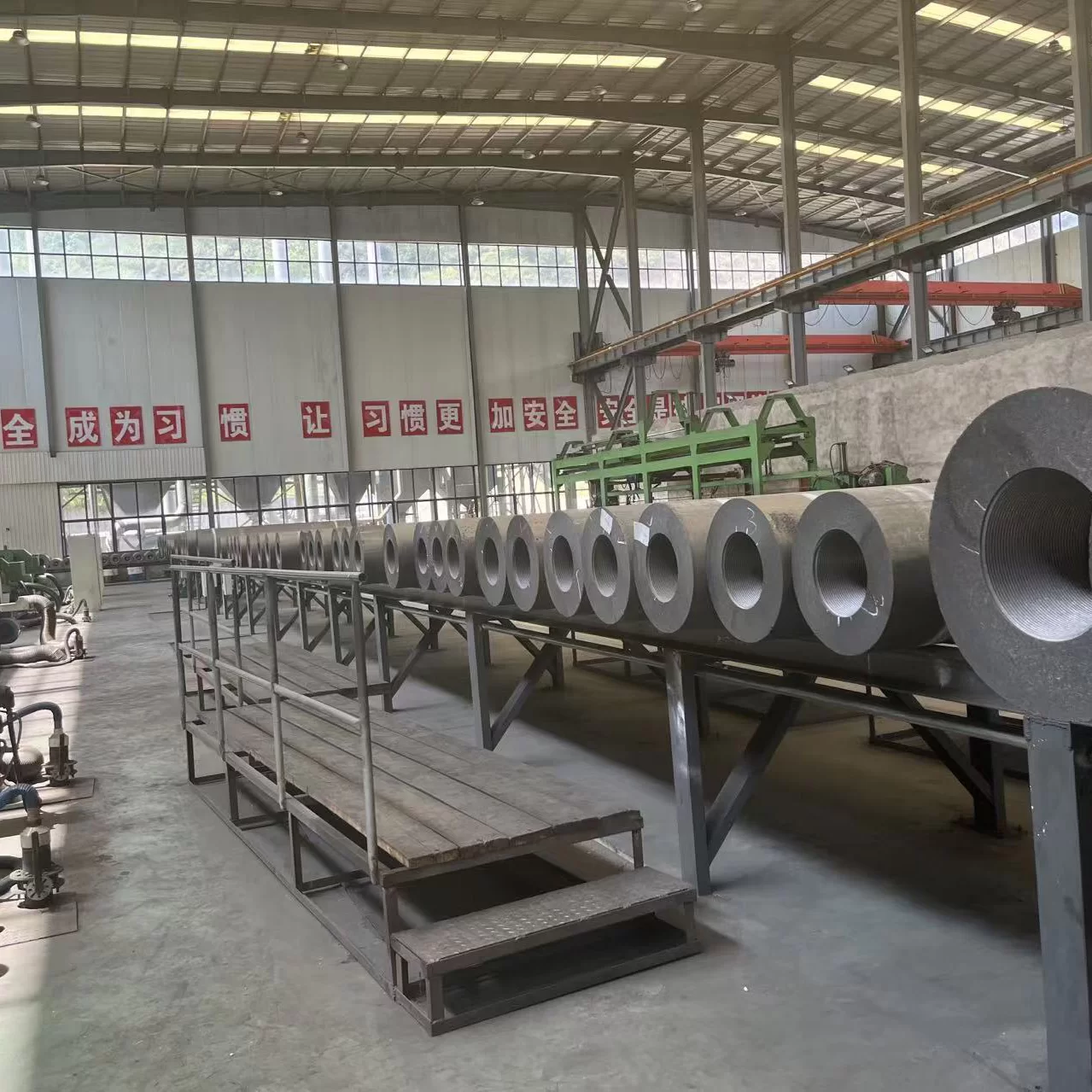
The Definitive Guide to Isostatic Graphite: Performance and Applications
In the realm of advanced materials, isostatic graphite represents the pinnacle of carbon engineering. Unlike traditional extruded graphite, isostatic graphite is manufactured using cold isostatic pressing, resulting in a material with a uniform structure and isotropic properties. This means its physical and mechanical characteristics remain consistent regardless of the direction of the applied force. For industries demanding extreme precision and thermal stability, this material is indispensable. In this guide, we will explore why isostatic graphite is the preferred choice for high-performance industrial components, from semiconductor manufacturing to aerospace engineering.

What Exactly is Isostatic Graphite?
At its core, isostatic graphite is a high-purity carbon material produced through a specialized process where pressure is applied uniformly from all directions. This "isostatic" approach eliminates the internal stresses and directional weaknesses found in conventional graphite. The result is a homogeneous microstructure that offers superior resistance to thermal shock and mechanical wear. Because it is refined through high-temperature graphitization, it possesses exceptional electrical conductivity and chemical purity, making it ideal for environments where contamination must be kept to an absolute minimum.
Technical Advantage: The isotropic nature of the material ensures that thermal expansion is identical in all axes, preventing warping or cracking during rapid temperature fluctuations.
Key Advantages of Choosing Isostatic Graphite
The transition to isostatic graphite provides several critical operational benefits. Firstly, its ultra-low porosity makes it highly resistant to gas penetration and chemical corrosion. Secondly, the ability to be machined with extreme precision via CNC technology allows for the creation of complex geometries without compromising structural integrity. Furthermore, its superior mechanical strength allows components to withstand higher pressures and stresses compared to standard carbon products, significantly extending the service life of industrial furnace components and molds.
Primary Performance Benefits:
• Uniform thermal expansion (no warping)
• High resistance to thermal shock
• Exceptional chemical purity and low ash content
• Superior machining precision for tight tolerances
Comparing Isostatic Graphite vs. Extruded Graphite
Understanding the difference between isostatic graphite and traditional extruded graphite is essential for selecting the right material for your project. Extruded graphite often exhibits "grain" or directionality, meaning it is stronger in one direction than another. Isostatic graphite removes this limitation entirely. For applications involving rapid heating and cooling cycles, the isotropic nature of the material prevents the internal stresses that typically lead to premature failure in extruded components.
Industrial Applications of Isostatic Graphite
The unique properties of isostatic graphite make it a cornerstone in several high-tech sectors. In the semiconductor industry, it is used for wafer carriers and heating elements due to its purity and thermal stability. In vacuum metallurgy, it serves as the ideal material for crucibles and molds that must withstand extreme temperatures without contaminating the melt. Additionally, the aerospace sector utilizes this material for heat shields and specialized nozzles where precise geometry and thermal resistance are non-negotiable.

Technical Specifications of Isostatic Graphite
To ensure the optimal selection of isostatic graphite, engineers look at specific performance metrics. Key indicators include bulk density, electrical resistivity, and the coefficient of thermal expansion (CTE). Our materials are processed to meet stringent global standards, ensuring that every batch provides consistent reliability. Below are the typical technical specifications for our premium grade isostatic carbon products:
Maintenance and Optimization for Graphite Components
To maximize the ROI of isostatic graphite components, proper maintenance is key. While the material is naturally robust, oxidation at temperatures above 400°C can lead to surface degradation. Implementing protective coatings or using inert gas environments can drastically extend the lifespan of these parts. Furthermore, regular inspection for micro-cracks and using precision CNC re-facing can restore the dimensional accuracy of components, reducing downtime and overall operational costs in smelting and semiconductor fabrication.
Conclusion: The Future of Industrial Precision with Isostatic Graphite
The strategic adoption of isostatic graphite is a commitment to quality and efficiency. By providing uniform physical properties, exceptional thermal resistance, and unmatched purity, it solves the inherent weaknesses of traditional graphite. Whether you are optimizing a semiconductor furnace or designing a high-pressure aerospace component, the reliability of isostatic materials ensures a competitive edge. Invest in the precision of isostatic graphite to drive your industrial performance forward.
Frequently Asked Questions (FAQs)
What is the main difference between isostatic and extruded graphite?
The primary difference lies in the structural uniformity. Extruded graphite is created by pushing the material through a die, which creates a grain structure and leads to different properties along different axes (anisotropy). Isostatic graphite is pressed uniformly from all sides, resulting in an isotropic structure. This means it expands and contracts equally in all directions when heated, which is critical for avoiding cracks and warping in high-precision applications.
In which industries is isostatic graphite most commonly used?
It is widely used in the semiconductor industry for wafer carriers and heating elements due to its high purity. In the metallurgy sector, it is used for vacuum crucibles and molds. It is also essential in the aerospace and defense industries for components that require extreme thermal shock resistance and high-temperature stability. Any industry that requires high-purity carbon with precise dimensional stability typically relies on isostatic graphite.
How does the purity of isostatic graphite affect the end product?
High purity is critical because impurities (such as ash or sulfur) can migrate into the molten metal or semiconductor wafer during high-temperature processing, causing defects or contamination. Isostatic graphite is processed to have ultra-low ash content, ensuring that the final product remains pure. This purity also improves the electrical conductivity and chemical resistance of the material, enhancing the overall efficiency of the manufacturing process.
Can isostatic graphite be customized to specific sizes?
Yes, one of the greatest advantages of this material is its excellent machinability. Using advanced CNC precision machining, isostatic graphite can be customized into extremely complex shapes with very tight tolerances. Whether you need a large-diameter crucible or a tiny, intricate semiconductor component, the material can be tailored to meet exact industrial specifications without losing its structural integrity.