

Securing High-Purity Green Delayed Petroleum Coke for Industrial Success
Sourcing raw carbon materials often presents a significant challenge: finding a balance between consistent chemical stability and supply chain reliability. Variability in sulfur content or volatile matter in feedstock can disastrously impact downstream calcination results and anode performance. Manufacturers frequently face the dilemma of fluctuating material quality that disrupts production schedules and degrades the final product's integrity.
At Ding An Heng New Material Technology Co., Ltd., we understand that the foundation of superior carbon products begins with the raw material. Leveraging over 20 years of industry experience and a standardized laboratory certified by SGS and ISO, we eliminate the guesswork in material procurement. Our rigorous screening process ensures that every batch aligns with the specific requirements of calcining and graphitization. With an annual comprehensive production capacity of 60,000 tons and a global logistics network reaching over 250 countries, we transform the sourcing of raw materials from a logistical hurdle into a strategic advantage, ensuring your operations run smoothly with premium-grade inputs.
Engineering Standards for Green Delayed Petroleum Coke
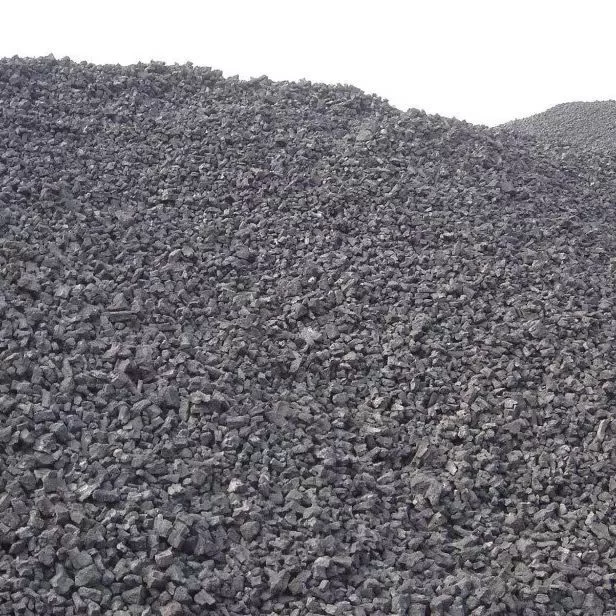
Precision in carbon feedstock is not merely a preference; it is an engineering necessity. The transformation of raw coke into Calcined Petroleum Coke (CPC) or Graphitized Petroleum Coke (GPC) relies heavily on the initial morphology and chemical composition of the green coke. Our approach utilizes full-process testing labs to monitor critical metrics such as sulfur content, ash, and volatile matter, ensuring the material supports high-temperature resistance and strong conductivity in final applications.
We benchmark our inventory against strict international protocols to serve high-demand sectors like steel milling and aluminum smelting. Below is an overview of how we assess and qualify materials to ensure they meet the rigorous demands of modern metallurgy.
| Performance Metric | Industry Significance | Our Engineering Standard | Advantage |
|---|---|---|---|
| Sulfur Content | Determines environmental compliance and "puffing" effects during graphitization. | Strictly Controlled (Low/Medium variations) | Reduces potential for cracking during thermal processing and ensures ISO compliance. |
| Volatile Matter (VM) | Indicates the yield efficiency during the calcination process. | Optimized ranges (typically 10-14%) | Maximizes fixed carbon yield, reducing wastage and processing energy costs. |
| Ash Content | Impurity level that affects the conductivity of the final electrode/anode. | Minimized (<0.5% targeted) | Ensures higher purity and better electrical conductivity in downstream products. |
| Microstructure | Affects the density and mechanical strength after baking. | Sponge/Needle structure verification | Guarantees structural integrity for UHP/HP graphite electrode manufacturing. |
Maximizing ROI with Premium Green Delayed Petroleum Coke
Investing in superior feedstock is a strategic financial decision. Utilizing high-quality raw materials directly correlates to reduced energy consumption during the calcination phase and lower rejection rates in electrode manufacturing. By integrating materials that have passed through Ding An Heng’s rigorous SGS and CIQ certified protocols, manufacturers can significantly lower their Total Cost of Ownership (TCO). The consistency provided by our 88,000 square meter facility and full-chain operational control means fewer production halts and higher yields.
The chart below illustrates the comparative yield efficiency and energy savings when utilizing optimized green delayed petroleum coke versus non-standardized market averages. By prioritizing low-impurity inputs, operators maximize the conversion rate to fixed carbon, driving long-term profitability.
Related products


Top Selling Products



How to Choose Polish Varnish Cleaner & Graphite Compound Tools for Your Process

Factors Affecting the Spherical Graphite Price and Market Trends

Industrial Analysis of the Price of Graphite per Pound


