Alright, let's talk about something that might sound a little contradictory at first: water soluble graphite powder. I know, I know – for most of us, graphite means that familiar, layered carbon material that’s decidedly not soluble in water. Think pencil lead, folks; it doesn't dissolve when it gets wet, does it? But here's the thing: innovation never rests. The concept of truly water-compatible carbon materials, especially high-purity graphite, is a game-changer across numerous industries. While traditional artificial graphite powder, like the kind used in batteries and lubricants, is fundamentally hydrophobic, advances in material science are pushing boundaries to create forms that can stably disperse or even 'dissolve' in aqueous solutions. It’s a fascinating area, opening up possibilities we could only dream of a decade or two ago, and one that's certainly getting a lot of buzz in the research community.
The Buzz: Industry Trends & Applications
Honestly, the push for materials that are both functional and easy to process in aqueous environments is massive. We're seeing trends towards greener manufacturing, fewer volatile organic compounds (VOCs), and more biocompatible applications. This is where water soluble graphite powder, or more accurately, highly dispersible or functionalized graphite materials, really shine. Industries from advanced coatings and conductive inks to biomedical sensors and energy storage are clamoring for these innovations. Imagine conductive inks that can be printed from water-based solutions, or highly stable lubricants for demanding applications where oil is a no-go. It's not just about conductivity; it's about lubricity, thermal management, and even biocompatibility.
Unpacking the Specs: What Are We Looking At?
When we talk about graphite powder, whether it's the traditional, inherently insoluble type or its modified "water-friendly" cousins, a few key technical specifications always come up. For high-quality graphite powder wholesale, purity and morphology are paramount. Let's look at the foundational properties of a typical artificial graphite powder, which often serves as the base for many advanced applications, even those aiming for water compatibility.
Artificial Graphite Powder: Key Specifications | |
Property | Value / Description |
Hardness (Mohs) | 1-2 (can increase to 3-5 with impurities vertically) |
Specific Gravity | 1.9 ~ 2.3 |
Melting Point (oxygen isolation) | Above 3000 °C (one of the most temperature resistant minerals) |
Chemical Stability (room temp) | Relatively stable; insoluble in water, dilute acid, dilute alkali, organic solvents. |
Key Applications | Refractory, conductive material, wear-resistant lubricant |
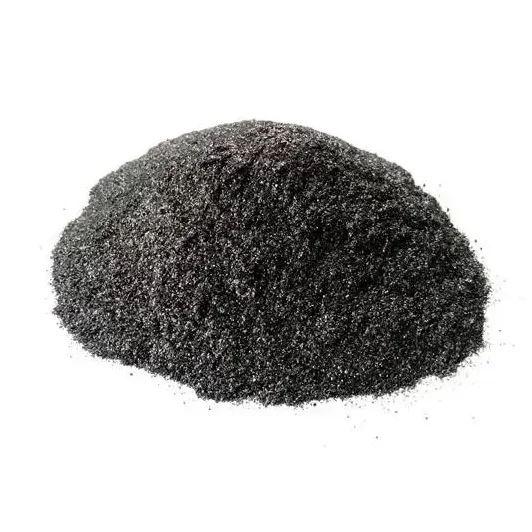
How is "Water Solubility" Achieved?
So, if raw graphite is insoluble, how do we get water soluble graphite powder? This is where chemistry comes into play. It's often not true molecular solubility but rather stable dispersion of very fine graphite particles or graphene derivatives. Common methods include:
· Oxidation: Creating graphite oxide or graphene oxide introduces polar functional groups (-OH, -COOH) that make the material hydrophilic.
· Surface Functionalization: Grafting polymers or surfactants onto graphite particles to improve their dispersibility in water.
· Exfoliation: Producing extremely thin layers (graphene, few-layer graphene) that can be stabilized in aqueous solutions with the help of dispersing agents.
The process generally involves high-purity graphite as a starting material, followed by chemical treatments, exfoliation techniques (like sonication or ball milling), and rigorous quality control to ensure uniform particle size and dispersion stability. Testing standards typically involve zeta potential measurements, particle size analysis (DLS), and long-term stability tests to ensure the "solubility" (dispersion) holds up.
Choosing Your Graphite Partner: A Quick Comparison
When sourcing graphite, especially for specialized applications that might eventually lead to water-soluble derivatives, vendor reputation and capabilities are huge. Many customers say it's not just about the price, but the consistency and technical support. Here's a generalized look:
Graphite Powder Vendors: What to Consider | ||
Feature | Vendor A (e.g., DahCarbon) | Vendor B (Competitor) |
Product Range | Broad, focus on artificial graphite powder | Niche, might offer specialized modified carbons |
Quality & Purity | High purity, consistent specs | Variable, real-world use may vary |
Customization | Particle size, specific gravity adjustments | Limited or specific functionalization options |
Certifications | ISO, REACH compliance | Might vary by region or product |
Technical Support | Strong, application guidance | Basic or self-service |
The Road Ahead: Challenges and Opportunities
Developing stable, cost-effective water soluble graphite powder (or its dispersible variants) isn't without its challenges. Maintaining long-term stability, preventing aggregation, and scaling up production are significant hurdles. However, the potential payoffs – from advanced electronics and next-gen energy solutions to eco-friendly industrial processes – are too big to ignore. It’s a field that demands continuous R&D and collaboration between material scientists and industry end-users.
Authoritative Standards & Further Reading
When evaluating any graphite product, adherence to authoritative standards is key. Look for compliance with ISO 9001 for quality management, and relevant material-specific standards like ASTM for carbon materials. For advanced materials like graphene oxide, new industry standards are continually emerging. It's truly a dynamic space!
2. Mater. Today, 2019, 23, 7-18. Scalable production of graphene.
3. Nanoscale, 2020, 12, 10738-10752. Advances in water-soluble carbon nanomaterials.