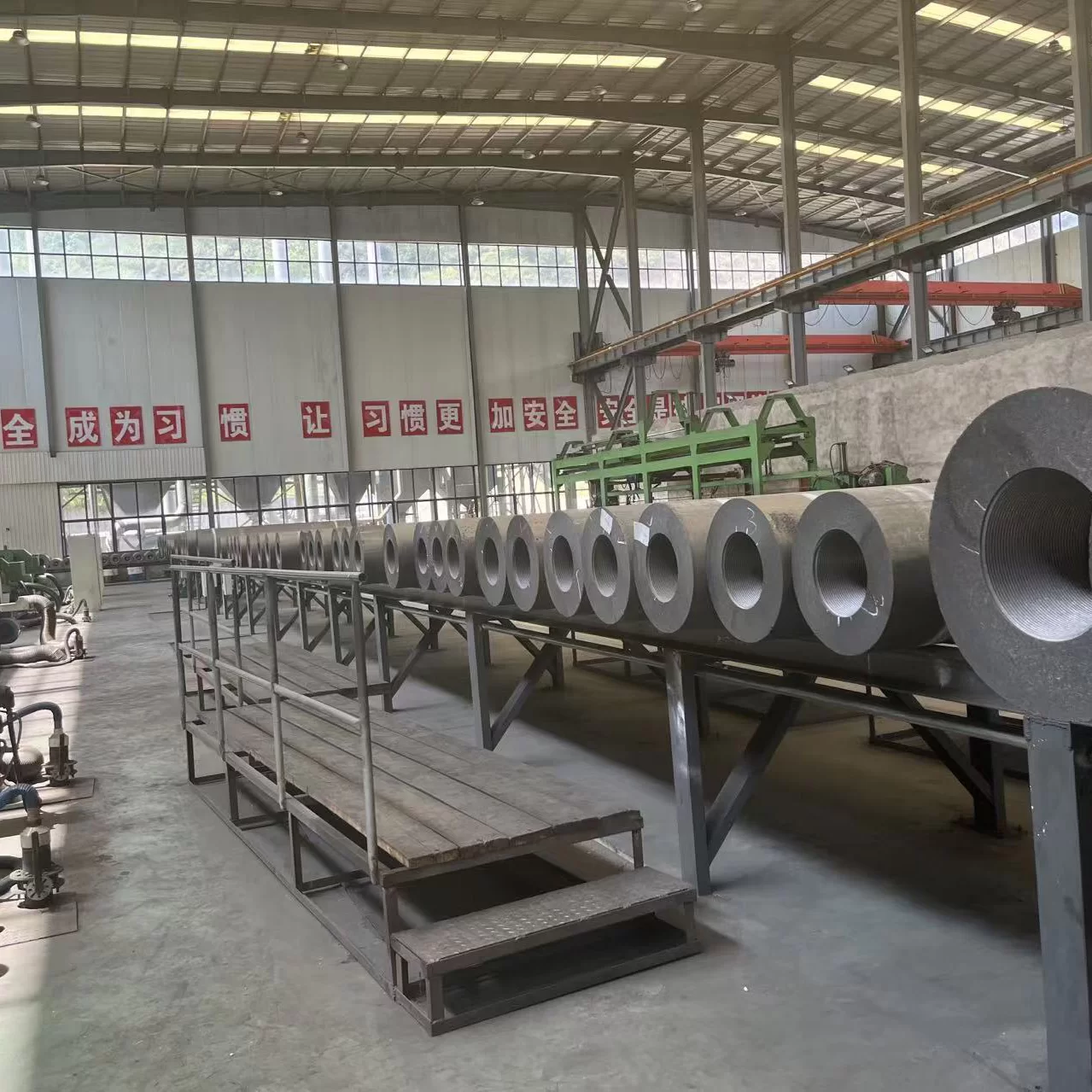
A recarburizer is a carbon-containing material added to molten iron or steel to increase its carbon content during the production process. It is widely used in steelmaking, cast iron production, and foundry operations where precise carbon adjustment is required.
In simple terms, the recarburizer meaning is a material used to restore or raise carbon levels after melting, refining, or other processing steps have reduced the carbon content of molten metal.
Recarburizers are also commonly called carbon raisers, carbon additives, or carburizing agents. Depending on the application, they can be produced from different carbon-rich raw materials, including petroleum coke, calcined petroleum coke, graphite, and other carbon materials.
What Is a Recarburizer Used For?
The primary purpose of a recarburizer is to increase the carbon content of molten metal to a target level.
During steelmaking or iron melting, carbon can be lost through oxidation. If the final carbon content is below the required specification, manufacturers can add a recarburizer to adjust the chemical composition.
Typical applications include:
- Carbon adjustment in molten steel
- Cast iron production
- Ductile iron production
- Gray iron production
- Electric arc furnace steelmaking
- Induction furnace melting
- Foundry operations
- Production of carbon steel and alloy steel
For foundries, accurate carbon control is particularly important because carbon affects the structure, hardness, strength, machinability, and other properties of cast iron.
How Does a Recarburizer Work?
A recarburizer works by introducing carbon into molten metal. After being added to the furnace or molten bath, the carbon material dissolves and becomes part of the metal's chemical composition.
The effectiveness of a recarburizer depends on several factors, including:
- Fixed carbon content – Higher fixed carbon generally means more available carbon for adjustment.
- Ash content – Lower ash can reduce unwanted impurities.
- Sulfur content – Low-sulfur grades are important for applications with strict sulfur requirements.
- Nitrogen and volatile matter – These can affect the final chemistry and melting process.
- Particle size – Proper sizing can improve dissolution and material recovery.
- Temperature and melting conditions – Higher molten-metal temperatures can influence carbon absorption.
- Addition method – The location and timing of addition can affect recovery efficiency.
Therefore, choosing a recarburizer is not simply a matter of selecting the material with the highest carbon percentage. The grade needs to match the furnace, metal composition, and production process.
What Materials Are Used to Make Recarburizers?
Different carbon-rich materials can be used as recarburizers. The choice depends on the required carbon content, impurity limits, production process, and cost.
Calcined Petroleum Coke Recarburizer
Calcined petroleum coke is widely used as a carbon additive because calcination removes much of the volatile matter and produces a material with high fixed carbon.
It can be suitable for applications requiring controlled carbon addition and relatively low moisture and volatile content.

Graphite Recarburizer
Graphite has a highly ordered carbon structure and can provide good carbon dissolution in molten metal. Graphitized petroleum coke is also used in applications where high carbon recovery and low impurity levels are important.
Petroleum Coke
Petroleum coke can also be processed and used as a carbon raiser. Its suitability depends on its sulfur, ash, volatile matter, and fixed carbon levels.
The right choice should be based on the chemical requirements of the finished steel or iron rather than carbon content alone.

Recarburizer vs. Carburizer: Are They the Same?
The terms recarburizer and carburizer are often used interchangeably in the metallurgical industry, although their usage can vary by application and region.
Both generally refer to carbon-containing materials used to increase the carbon content of molten metal.
The term recarburizer emphasizes the idea of restoring carbon that has been lost during melting or refining, while carburizer is a broader term for a carbon additive used to introduce carbon into metal.
Other commonly used terms include:
| Term | Common Meaning |
|---|---|
| Recarburizer | Carbon material used to raise carbon content in molten metal |
| Carbon raiser | Material added to increase carbon levels |
| Carburizing agent | Carbon-containing additive used for carburization |
| Carbon additive | General term for carbon-based metallurgical additives |
| Graphite recarburizer | Recarburizer based on graphite or graphitized carbon |
When purchasing these materials, buyers should focus on the actual chemical specification and application rather than relying only on terminology.
Key Specifications of a Recarburizer
For industrial buyers, the chemical and physical specifications are critical.
A typical recarburizer specification may include:
| Specification | Why It Matters |
|---|---|
| Fixed Carbon (FC) | Determines the available carbon content |
| Sulfur (S) | Important for controlling final metal chemistry |
| Ash | Indicates non-carbon mineral content |
| Volatile Matter (VM) | Affects behavior during heating |
| Moisture | Influences handling and effective carbon content |
| Nitrogen (N) | May matter in sensitive steelmaking applications |
| Particle Size | Affects dissolution and carbon recovery |
For example, a foundry producing ductile iron may have different requirements from a steel mill using an electric arc furnace. Therefore, recarburizer specifications should always be selected according to the target metal chemistry and furnace process.
How to Choose the Right Recarburizer
When selecting a recarburizer supplier, buyers should evaluate more than the advertised fixed carbon percentage.
First, confirm the chemical composition. Fixed carbon, sulfur, ash, volatile matter, nitrogen, and moisture should meet the requirements of the intended application.
Second, consider particle size. Different furnaces and addition methods may require different particle-size distributions.
Third, evaluate carbon recovery. A material with high theoretical carbon content does not necessarily deliver the same effective carbon recovery under every operating condition.
Finally, consider supply consistency. Stable chemical composition and particle size are important for manufacturers that need repeatable furnace results.
A reliable supplier should be able to provide a certificate of analysis (COA) or technical specification sheet for each grade.
Recarburizer for Steelmaking and Foundries
Recarburizers play an important role in both steelmaking and iron casting.
In steelmaking, carbon is one of the fundamental elements used to control steel grade and mechanical properties. Carbon additions may be required after melting or refining to reach the target composition.
In foundries, carbon control is closely related to cast iron quality. Gray iron, ductile iron, and other cast iron grades require carefully controlled chemical compositions.
For this reason, foundries often select recarburizers based on their furnace type, target carbon content, sulfur requirements, and desired carbon recovery.
Why Recarburizer Quality Matters
The quality of a recarburizer can directly influence the efficiency of carbon adjustment.
A consistent product helps manufacturers reduce variation between batches and improve control over molten-metal chemistry. Low ash and controlled impurity levels can also help reduce the introduction of unwanted elements.
For high-volume steel mills and foundries, consistency is particularly important because even small variations in raw material quality can affect process control when multiplied across many production batches.
Therefore, buyers should evaluate fixed carbon, impurity levels, particle size, carbon recovery, packaging, and supply stability when comparing recarburizer suppliers.
Conclusion
The recarburizer definition is straightforward: it is a carbon-rich material added to molten iron or steel to increase or restore carbon content.
However, selecting the right recarburizer requires a deeper understanding of the application. Fixed carbon is important, but sulfur, ash, volatile matter, moisture, particle size, and carbon recovery can also influence performance.
Whether used in steelmaking, cast iron production, ductile iron, gray iron, or foundry operations, the right recarburizer can help manufacturers achieve more precise carbon control and consistent metal chemistry.
For industrial buyers, the best starting point is to compare the chemical specifications and recommended applications of different recarburizer grades and then match them with the specific furnace and production requirements.