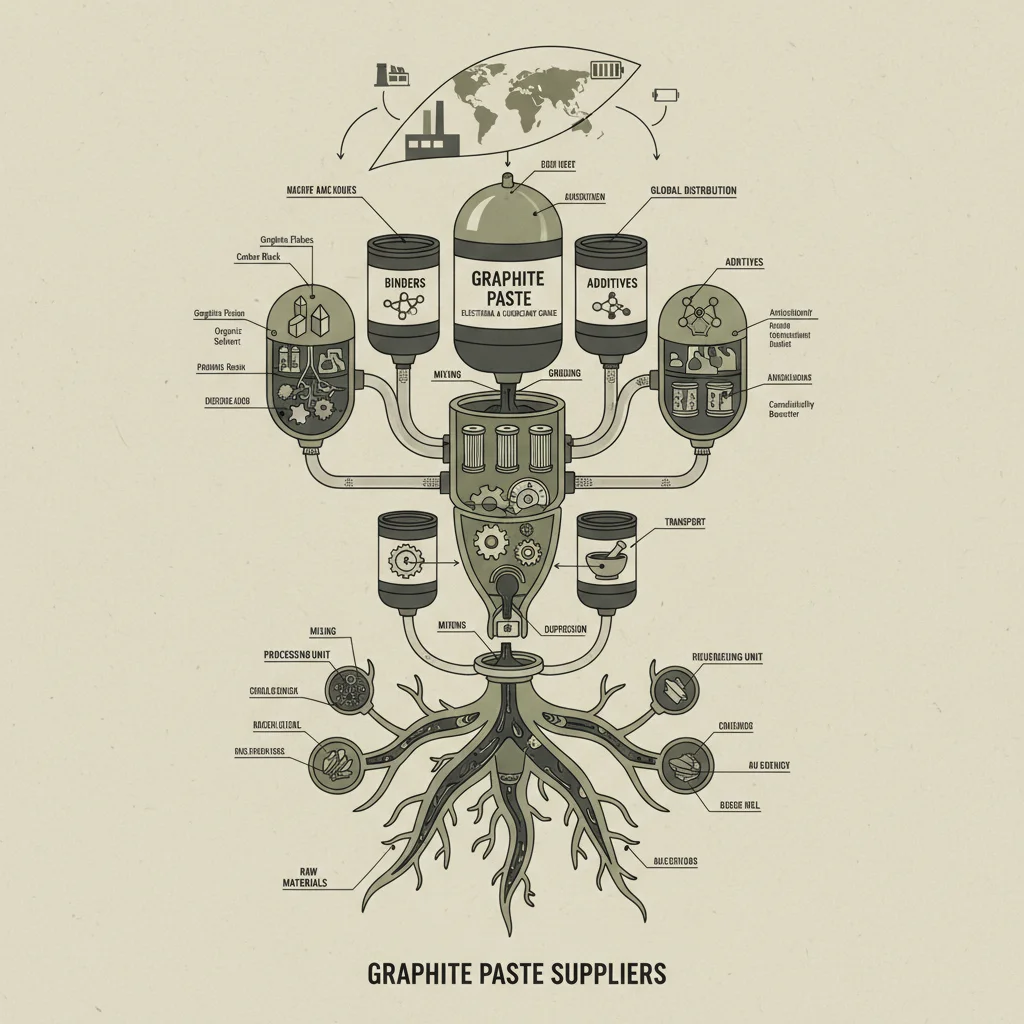
Synthetic graphite companies specialize in the production of high-purity carbon materials engineered through the graphitization of precursors like petroleum coke or coal tar pitch. Unlike natural graphite, synthetic variants are produced under strictly controlled industrial conditions, ensuring a consistent crystalline structure and superior purity levels essential for high-performance electronics and metallurgical applications.
In heavy industries, the reliability of carbon sources is a critical pain point; impurities such as sulfur and phosphorus can compromise the structural integrity of alloys and the efficiency of electric arc furnaces. The demand for synthetic graphite arises from the need for materials that offer predictable electrical conductivity and thermal stability, which natural deposits often lack due to geological variability.
This technical analysis explores the operational advantages of synthetic graphite, comparing it with raw carbon alternatives, and provides a procurement framework for engineers. Readers will gain a comprehensive understanding of how to evaluate synthetic graphite companies based on purity standards, carbonization precision, and application-specific performance metrics.

1Understanding Synthetic Graphite Production

The production of synthetic graphite is a complex thermodynamic process involving the heating of carbonaceous materials to extreme temperatures. Synthetic graphite companies typically utilize petroleum coke as a primary feedstock, which undergoes a two-stage process: baking and graphitization. Baking removes volatile components, while graphitization at temperatures exceeding 2,500°C rearranges the carbon atoms into a hexagonal lattice, significantly increasing electrical conductivity.
Precision in temperature control is the hallmark of a high-quality producer. If the heating rate is inconsistent, the material may develop internal stresses, leading to structural fractures during industrial use. Advanced companies utilize automated furnace systems to maintain a uniform thermal gradient, ensuring that the resulting graphite block or powder is homogeneous throughout.
Furthermore, the choice of binder plays a vital role in the density of the final product. By optimizing the carbon-to-binder ratio, manufacturers can tailor the porosity of the graphite, making it suitable for either high-density electrodes or porous filters used in chemical processing.
2Core Technical Advantages of Synthetic Carbon
Synthetic graphite offers distinct advantages over raw coal or natural graphite, primarily centered on its customizable purity. By utilizing refined petroleum coke, synthetic graphite companies can reduce sulfur and ash content to negligible levels. This is indispensable in the semiconductor and aerospace industries, where even trace amounts of contamination can lead to catastrophic component failure.
Another key advantage is the ability to control grain size and morphology. Whether the requirement is for a micro-fine graphite powder for lubrication or a massive graphite block for smelting, synthetic processes allow for precise geometric and structural engineering. This consistency reduces the need for secondary processing and lowers the risk of operational downtime.
Thermal stability is also enhanced. Synthetic graphite maintains its mechanical strength at temperatures where most metals melt, making it the ideal material for crucibles and furnace linings. Its low coefficient of thermal expansion ensures that components do not warp under extreme thermal cycling.
3Industrial Application Scenarios
The application of synthetic graphite spans across several critical industrial sectors. In the steel industry, graphite electrodes produced by specialized companies are essential for Electric Arc Furnaces (EAF). These electrodes must conduct massive currents while resisting the erosive environment of molten metal, requiring a perfect balance of density and conductivity.
In the aluminum industry, synthetic carbon materials are used to create pre-baked anodes. The ability of these materials to remain stable during the electrolysis of alumina into aluminum is paramount. High-quality recarburizers, such as GPC and CPC, are often employed to optimize the carbon content in these processes, reducing overall energy consumption.
Beyond metallurgy, synthetic graphite is widely used in battery anode production. The high conductivity and structured layers allow for efficient lithium-ion intercalation, which is the foundation of modern EV batteries. This requires the highest grade of purity, often necessitating additional chemical purification stages.
4Performance Metrics and Data Analysis
Evaluating the quality of synthetic graphite requires a look at several quantitative metrics. Fixed carbon content is the primary indicator of performance; a higher percentage typically correlates with better conductivity and chemical stability. Most industrial-grade synthetic graphite aims for a fixed carbon level above 98%.
Another critical metric is the ash content. Ash represents the non-carbon impurities that can introduce unwanted elements into a melt. Synthetic graphite companies employ rigorous filtering and refining to keep ash levels below 0.1% for high-end applications, whereas natural graphite often contains significantly higher levels of silica and alumina.
synthetic graphite companies Performance Metrics
Electrical resistivity is measured in micro-ohm centimeters. A lower resistivity value indicates a more efficient flow of current, which is critical for reducing power costs in industrial furnaces. The chart above illustrates how synthetic graphite consistently outperforms industry averages across purity and stability metrics due to the controlled graphitization process.
5Procurement and Quality Selection Guide
When selecting a supplier among various synthetic graphite companies, procurement teams should prioritize those with integrated quality control laboratories. The ability to provide a detailed batch analysis report (CoA) including sulfur, phosphorus, and ash content is non-negotiable for high-precision engineering projects.
Compatibility is another key factor. For those seeking recarburizers, it is essential to match the carbonization temperature of the material to the specific furnace requirements. For instance, semi-coke produced at 500-700°C offers a different reactivity profile than fully graphitized petroleum coke.
Finally, consider the logistics and supply chain stability. Because synthetic graphite production is energy-intensive, suppliers with their own production lines and strategic raw material sources are better equipped to handle large-scale, long-term contracts without price volatility.
6Market Trends and Material Innovation
The synthetic graphite market is currently shifting towards "green carbon" initiatives. Companies are exploring biomass-derived precursors to reduce the carbon footprint associated with petroleum coke. This innovation aims to maintain the technical properties of synthetic graphite while aligning with global ESG standards.
Another trend is the development of nano-structured synthetic graphite. By manipulating the graphite at the molecular level, manufacturers can create materials with enhanced surface areas, which are highly beneficial for catalysts and high-capacity energy storage systems.
As the demand for electric vehicles continues to surge, the focus of many synthetic graphite companies is shifting toward the battery anode sector. This transition requires a shift from bulk metallurgical production to ultra-high-purity chemical production, driving investment in new purification technologies.
7Comparative Analysis: Synthetic vs. Natural
Choosing between synthetic and natural graphite often comes down to a trade-off between cost and consistency. Natural graphite is generally more cost-effective for low-precision applications, but it suffers from natural impurities and variable grain structures that can cause unpredictable results in high-heat environments.
Synthetic graphite provides a "engineered" solution. By controlling every variable from feedstock to final cooling, synthetic graphite companies ensure that every kilogram of material behaves identically, which is crucial for automated industrial processes and safety-critical applications.
| Feature | Natural Graphite | Synthetic Graphite | Impact on Production |
|---|---|---|---|
| Purity Level | Variable/Moderate | Very High/Controlled | Reduced contamination |
| Consistency | Low (Batch variance) | High (Standardized) | Predictable results |
| Electrical Conductivity | Moderate | Excellent | Lower energy costs |
| Thermal Stability | Good | Superior | Longer component life |
| Cost | Lower | Higher | Higher initial investment |
| Availability | Mining dependent | Production dependent | More stable supply |
Ultimately, for industries such as aerospace, semiconductor manufacturing, and high-grade steelmaking, the higher cost of synthetic graphite is offset by the reduction in scrap rates and the increase in operational efficiency. For general lubricants or simple fillers, natural graphite remains the preferred choice.
Frequently Asked Questions
Conclusion
Synthetic graphite represents the pinnacle of carbon engineering, providing the reliability and purity that natural materials cannot match. For industries where precision is paramount—from the production of high-grade ferroalloys to the development of next-generation EV batteries—the role of synthetic graphite companies is indispensable in ensuring operational efficiency and product quality.
Selecting the right material requires a balanced analysis of purity, conductivity, and cost. Organizations seeking high-performance carbon solutions can review the detailed product specifications and available grades of graphite and recarburizers at www.hbdahcarbon.com to optimize their supply chain.