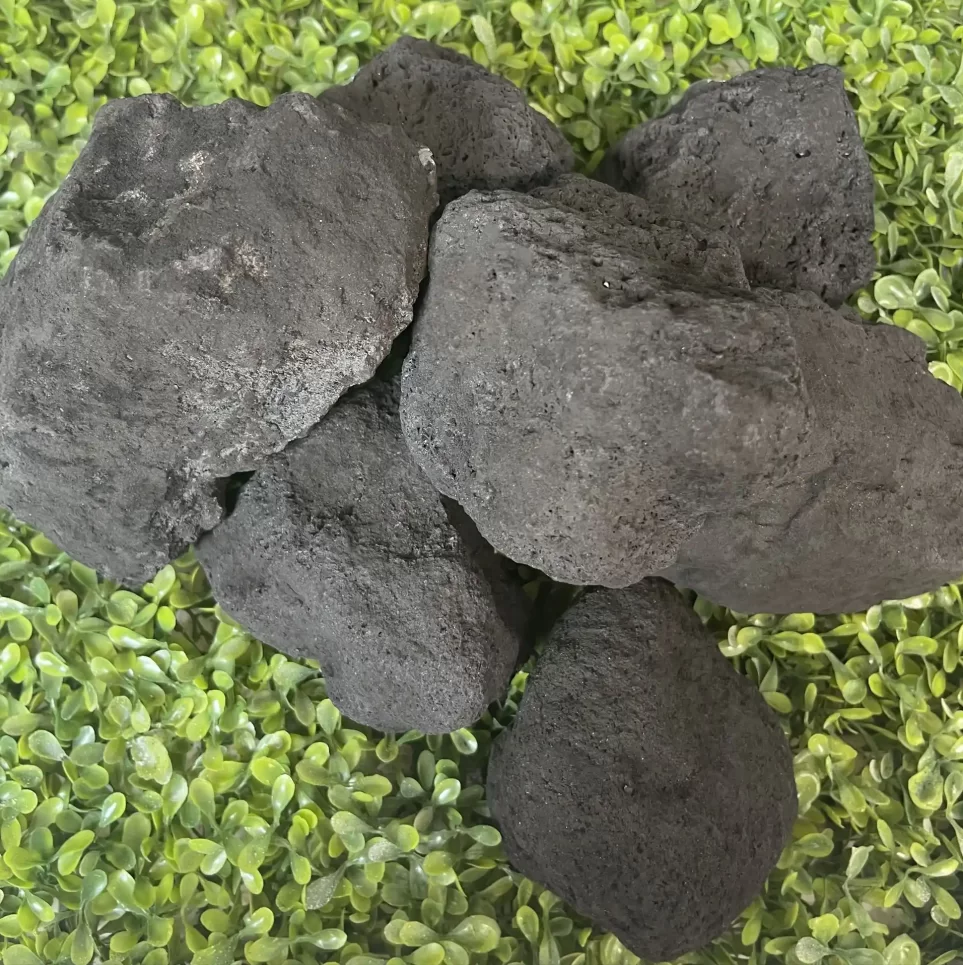
Providing essential raw materials for aluminum electrolysis, iron casting, and steel production across North Korea.


Evaluating the intersection of industrial demand and material procurement logic.
The industrial landscape in North Korea relies heavily on domestic mineral processing and heavy metallurgy. For plants operating arc furnaces, the stability of graphite electrode supply is critical to maintaining continuous production cycles, especially given the regional focus on self-reliance in steel and aluminum output.
Local buyers typically prioritize high-density and low-impurity materials to offset the operational challenges of aging infrastructure. There is a specific demand for calcined petroleum coke that can withstand rigorous thermal stress in pre-baked anode production for aluminum smelting.
Procurement in this market is often driven by the need for long-term stability and consistent chemical composition. As industries strive to reduce casting costs, the adoption of specialized recarburizers like graphitized petroleum coke becomes a key strategy for optimizing iron foundry yields.
Tracing the transition from basic carbon sources to engineered graphite solutions.
Key drivers shaping the next generation of graphite and carbon product usage.
Increasing demand for lower sulfur and ash content in petroleum coke to improve the quality of pre-baked anodes.
Advancements in the graphitization process to ensure graphite blocks maintain structural integrity at extreme temperatures.
Using high-efficiency recarburizers to reduce the total cost of casting in ductile iron foundries.
Scaling annual output to meet the needs of large-scale state industrial projects in the region.
The future of carbon materials in heavy industry is moving away from generic grades toward application-specific engineering. For the North Korean market, this means a transition where the chemical properties of carbon agents are precisely matched to the metallurgy of the specific furnace or casting mold being used.
Strategically, the integration of higher-grade graphite products will likely lead to improved energy efficiency in the aluminum and steel sectors, reducing waste and enhancing the longevity of smelting equipment.
Practical implementation of graphite and carbon products in regional manufacturing.
Application of calcined petroleum coke as a primary raw material for producing pre-baked anodes, ensuring high electrical conductivity and oxidation resistance.
Using graphitized petroleum coke as a recarburizer for the production of high-strength pipes, auto parts, and industrial boilers.
Deployment of UHP, HP, and RP graphite electrodes to maintain stable arcs and efficient melting of steel scrap.
Integration of graphite blocks and powder for creating molds that require high thermal conductivity and ease of release for complex metal parts.
Utilization of high-purity graphite powder in the manufacture of heat-resistant lubricants and specialized industrial coatings for heavy machinery.
Ding An Heng New Material Technology Co., Ltd: Over two decades of graphite expertise.
Established as a large-scale graphite production enterprise in China, building 20+ years of experience in high-quality carbon material manufacturing.
Implementation of two full production lines achieving an annual comprehensive production capacity of 60,000 tons.
Expanding from the domestic Chinese market to become a trusted supplier in Southeast Asia, the Middle East, Europe, and Africa.
Tailored grades of petroleum coke and graphite electrodes to match specific metallurgical requirements.
Technical and procurement guidance for graphite and coke products.
The choice depends on the final application. Calcined petroleum coke is primarily used for pre-baked anodes in aluminum smelting due to its structural properties, while graphitized petroleum coke is preferred as a recarburizer in iron foundries for its superior carbon recovery and conductivity.
Lifespan is mainly determined by the electrode's density, purity, and the current stability of the furnace. Using high-quality UHP electrodes reduces consumption rates by minimizing oxidation and thermal shock during the melting process.
Yes, graphite powder can be produced in various particle size distributions. For coatings and lubricants, a finer, more uniform grain size is typically required to ensure smooth application and optimal lubricity.
High-efficiency recarburizers increase the carbon absorption rate in the melt. This reduces the amount of material needed and shortens the processing time, leading to lower energy consumption and reduced scrap rates in the foundry.
We employ a strict laboratory and inspection system that monitors key parameters such as sulfur content, ash levels, and electrical resistivity to ensure every batch meets the required industrial standards.
Yes. Our materials are engineered for durability and stability. The high-density graphite products are particularly well-suited for heavy industrial environments where equipment must withstand extreme temperatures and varying operational conditions.
Discuss your technical requirements for carbon materials and optimize your production efficiency in North Korea with professional guidance.
Contact Us Now