Specialized raw materials designed for the rigorous demands of heavy manufacturing and smelting industries.


Addressing the unique operational requirements of the Southeast Asian smelting and casting markets.
Indonesia's industrial landscape is characterized by a strong focus on resource processing and infrastructure development. The regional geography, with its significant mineral deposits, drives a consistent need for high-grade graphite powder and carbon agents to optimize smelting efficiency in diverse climatic conditions.
Local buyers in the aluminum and steel sectors increasingly prioritize materials that can withstand high-temperature stability and reduce oxidation. There is a growing demand for consistent quality in calcined petroleum coke to ensure the longevity of pre-baked anodes and the stability of the electrolysis process.
Procurement in the Indonesian market often revolves around supply chain reliability and the ability to integrate international quality standards with local operational scales. Companies are shifting toward long-term partnerships with producers who can guarantee stable material specifications to minimize casting costs and production downtime.
From basic carburization to high-precision graphite engineering.
Key drivers shaping the next five years of industrial graphite usage.
Increased demand for ultra-low sulfur and low ash content to enhance the quality of specialty steels.
Focus on high-efficiency recarburizers that reduce total material volume while maintaining carbon levels.
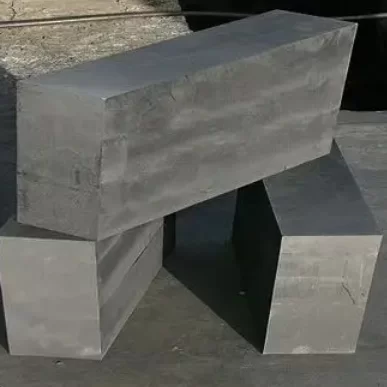
Optimizing bulk shipping methods to maintain the physical integrity of graphite blocks during transit.
Developing materials with lower thermal expansion coefficients for extreme-temperature furnace environments.
The transition toward more sustainable smelting practices will likely drive the adoption of higher-grade graphite materials. We expect a shift where operational efficiency is measured not just by output, but by the precision of carbon integration in the melt, reducing waste and energy loss.
From a procurement perspective, the ability to source materials with strict laboratory verification will become a competitive advantage for Indonesian foundries looking to enter high-end automotive and aerospace part manufacturing.
How specialized carbon products solve real-world industrial challenges.
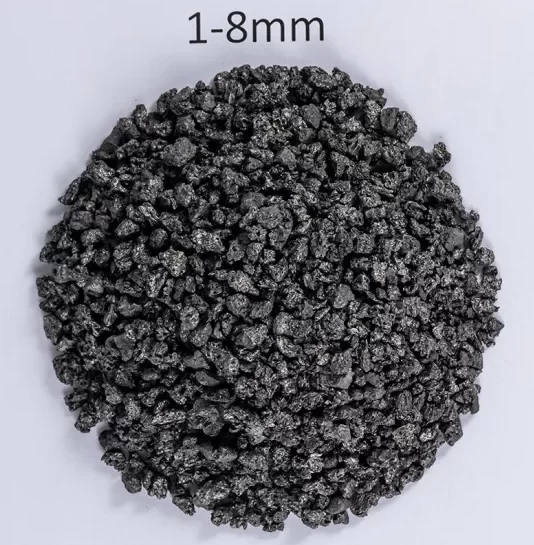
Utilizing calcined petroleum coke as a primary raw material for pre-baked anodes to ensure high electrical conductivity and structural strength during aluminum electrolysis.
Integrating graphitized petroleum coke into the casting process for water and sewage pipes to achieve a uniform nodular graphite structure and improve tensile strength.
Deployment of high-performance arc furnace electrodes to maintain a stable electrical arc, optimizing the melting speed and reducing electrode consumption rates.
Using high-purity graphite powder for precision casting of engine blocks and cylinder heads, ensuring minimal porosity and high surface finish.
Application of specialized recarburizers in the production of heavy-duty boiler components to enhance wear resistance and thermal stability.
Ding An Heng New Material Technology Co., Ltd: Two decades of graphite innovation.
Established as a large-scale graphite production enterprise in China, building over 20 years of expertise in carbon material science.
Development of two full production lines reaching an annual comprehensive capacity of 60,000 tons of graphite products.
Expansion of export operations to Southeast Asia, the Middle East, Europe, and Africa, establishing a reputation for quality and reliable service.
High-purity carbon materials tailored for the smelting, casting, and steel industries.
Technical and procurement guidance for the Indonesian market.
The choice depends on the application: calcined petroleum coke is primarily used for aluminum anode production and basic recarburization, while graphitized petroleum coke is preferred for high-precision ductile iron casting where superior graphite spheroidization is required.
Yes. Our products are manufactured to high stability standards. However, we recommend utilizing moisture-proof packaging and climate-controlled storage to prevent humidity-related degradation during long-term onsite stockpiling.
Critical parameters include electrical resistivity, compressive strength, and oxidation resistance. Ensuring these are optimized reduces electrode consumption and prevents premature breakage during the smelting process.
Yes, we can adjust particle size distribution and purity levels based on your specific casting or lubrication requirements to ensure optimal integration into your production line.
We employ a strict laboratory and inspection system that follows a comprehensive quality control system, ensuring that every batch meets the specified chemical and physical properties before dispatch.
Using high-efficiency recarburizers with high fixed carbon content and low impurities reduces the total amount of material needed and minimizes slag formation, directly lowering operational costs.
Consult with our technical experts to determine the ideal graphite and carbon material specifications for your specific smelting or casting project requirements.
Contact Us Now