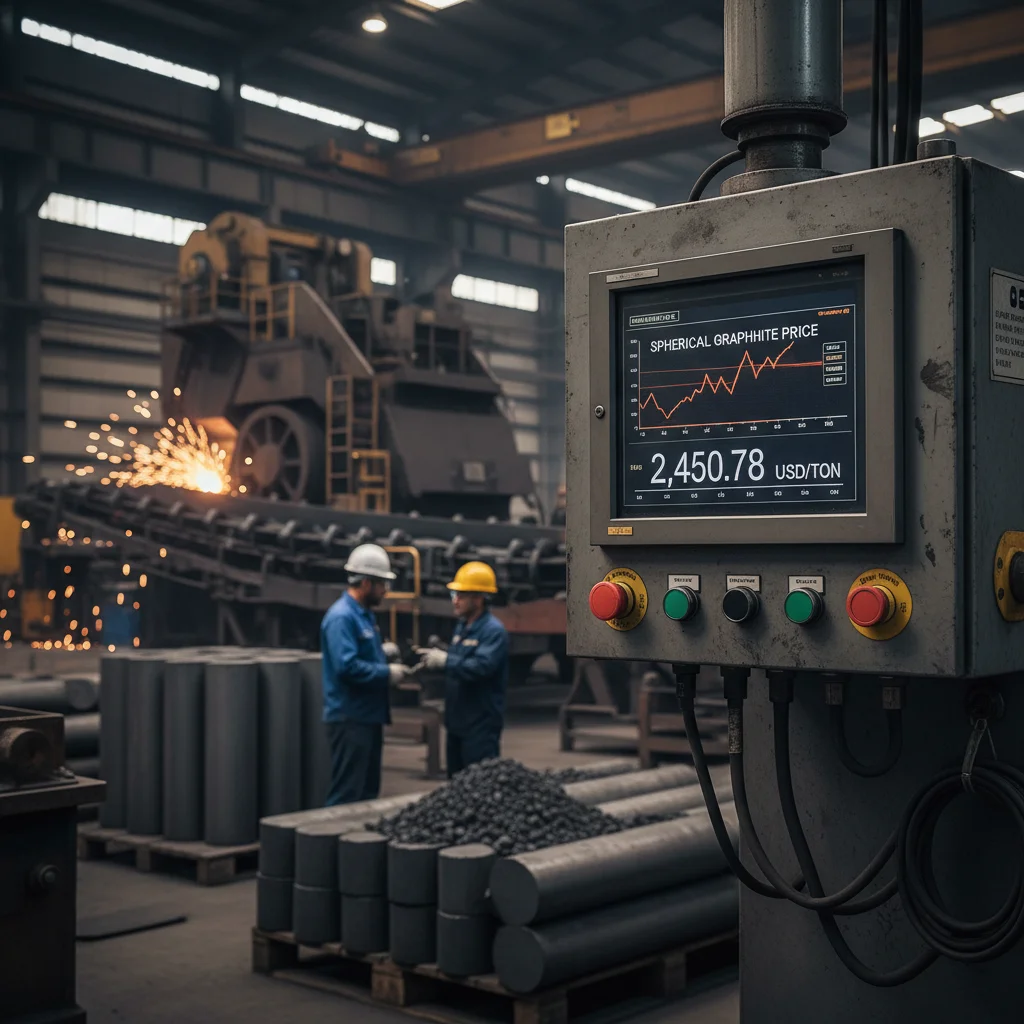
The global industrial landscape relies heavily on high-quality carbonaceous materials to drive metallurgical efficiency. Among the key players in this supply chain, the role of experienced graphite tube suppliers and carbon material providers is pivotal, as they ensure that industries have access to the high-strength, high-purity materials required for extreme temperature environments. Understanding the nuances of these materials is essential for optimizing production costs and ensuring structural integrity in heavy industry.
From the massive blast furnaces of the steel industry to the precision casting of the foundry sector, the demand for reliable carbon sources remains constant. The challenge for modern procurement officers is finding partners who can guarantee strict technical specifications, such as controlled ash content and high CSR (Coke Strength after Reaction) values. This ensures that the production cycle remains uninterrupted and the final metal quality is uncompromised.
Whether you are sourcing raw materials for non-ferrous metal production or looking for specialized graphite tube suppliers to support your infrastructure, the focus must always remain on the purity and physical properties of the carbon. By aligning procurement with precise technical standards, companies can achieve significant gains in thermal efficiency and reduction capacity.

The Role of Metallurgical Coke in Modern Industry
Metallurgical coke, often referred to as met coke, is a cornerstone of the steel-making process. It serves a dual purpose in blast furnaces: providing the intense heat necessary for smelting and acting as a chemical reducing agent to strip oxygen from iron ore. Without this fundamental carbonaceous material, the production of hot metal would be economically and technically unfeasible.
Beyond the iron and steel sectors, the importance of high-quality carbon materials extends to the production of non-ferrous metals such as aluminum, silicon, and titanium. In these specialized environments, the purity of the material is critical to prevent contamination, making the selection of reliable graphite tube suppliers and coke producers a strategic decision for chemical and foundry engineers.
Technical Production and Carbonization Processes
The creation of metallurgical coke is a precise thermal process involving the carbonization of coals or specialized coal blends. This process occurs at extreme temperatures, reaching up to 1400K, which drives off volatile matter and leaves behind a macroporous carbon structure. This structure is specifically engineered to be of high strength and relatively large size to maintain the permeability of the furnace load.
During this carbonization phase, the material transforms into a porous matrix that can withstand the immense physical pressure of the blast furnace while allowing gases to flow upward. This structural integrity is what differentiates industrial-grade met coke from standard fuel coals, ensuring that the furnace does not "hang" or collapse under its own weight.
Modern production facilities utilize advanced cooling and quenching techniques to ensure the resulting coke has a uniform density. This uniformity is essential for consistent heat distribution in foundry casting processes, where uneven temperatures can lead to structural defects in the final metal product.
Core Specifications for Industrial Carbon Sourcing
When evaluating potential partners, including experienced graphite tube suppliers, technical specifications are the only true measure of quality. Key parameters such as total moisture (max 4.00%) and ash content (max 11.00%) directly impact the fuel efficiency and purity of the smelted metal.
The Coke Strength after Reaction (CSR) is perhaps the most critical metric, with a minimum requirement of 62.00. A high CSR ensures that the material does not disintegrate prematurely in the furnace, which is a standard that top-tier graphite tube suppliers and carbon producers strive to maintain for their industrial clients.
Furthermore, volatile matter must be kept below 1.00% (dry) to ensure stability. By strictly adhering to these limits, manufacturers can avoid the volatility and impurities that often plague lower-grade carbon sources, ensuring a seamless transition from raw material to finished industrial product.
Comparative Performance of Carbon Materials
Understanding the performance variance between different carbon grades is essential for cost-optimization. Different industrial applications require different balances of strength, purity, and size distribution. For instance, casting processes in foundries demand higher heat distribution uniformity than simple reduction processes.
By analyzing the performance metrics of various carbon sources, companies can determine which specifications yield the highest return on investment. This involves comparing the CRI (Coke Reactivity Index) and M10 (strength loss after 10 seconds of reaction) to ensure the material can withstand the specific stresses of their equipment.
Material Performance Index for Graphite Tube Suppliers
Global Applications Across Metallurgical Sectors
The application of high-grade carbonaceous materials is truly global, with massive demand centers in Asia and Europe. In these regions, metallurgical coke is used not only for iron production but also as a potent reducing agent in the chemical industry, facilitating complex reactions that require stable, high-temperature carbon environments.
Moreover, the foundry industry utilizes these materials for their ability to reduce impurities in molten metal. In remote industrial zones, the reliability of the supply chain becomes the primary concern, making the logistical capabilities of graphite tube suppliers as important as the technical quality of the materials themselves.
Long-Term Value and Sustainability in Sourcing
Investing in high-specification carbon materials provides tangible long-term value by reducing waste and increasing the lifespan of furnace linings. When materials meet strict phosphorus and sulfur limits (Max 0.060% P and 0.80% S), the resulting metal is of higher purity, reducing the need for secondary refining and lowering energy consumption.
From a sustainability perspective, the industry is moving toward more efficient carbonization processes that reduce the emission of volatile organic compounds. Sourcing from providers who prioritize energy-efficient production contributes to a lower overall carbon footprint for the entire metallurgical chain.
Ultimately, the trust established between a manufacturer and its carbon suppliers is built on consistency. When a supplier can guarantee a narrow grain size distribution (e.g., less than 6% over 80mm and less than 5% under 25mm), it eliminates production bottlenecks and ensures a predictable output quality.
Quality Control Standards for Graphite Tube Suppliers
Quality control is the bedrock of the carbon industry. For professional graphite tube suppliers and coke manufacturers, this means implementing a rigorous testing regime for every batch. Parameters such as the CRI24-30 range are not just suggestions but are critical limits that define whether a material is fit for industrial use.
Non-conformity points are strictly monitored; for example, if moisture levels exceed 4.00%, the material is flagged, and if they exceed 8.00%, it is rejected outright. This zero-tolerance approach to quality prevents catastrophic furnace failures and ensures the safety of the operational workforce.
The following table summarizes the critical thresholds used by industry leaders to maintain the highest standards of material integrity and operational safety.
Technical Quality Thresholds for Carbonaceous Materials
| Parameter |
Acceptable Tolerance |
Non-conformity Point |
Rejection Limit |
| Total Moisture |
Max 4.00% |
> 4.00% |
> 8.00% |
| Ash Content |
Max 11.00% |
> 11.00% |
> 12.00% |
| Sulfur (S) |
Max 0.80% |
> 0.80% |
> 0.90% |
| CSR (Strength) |
Min 62.00 |
< 61.00 |
< 61.00 |
| Phosphorus (P) |
Max 0.060% |
> 0.060% |
> 0.065% |
| Volatile Matter |
Max 1.00% |
> 1.00% |
> 1.20% |
FAQS
The most critical specifications include the Coke Strength after Reaction (CSR), which should ideally be above 62.00, and the ash content, which should be kept under 11.00%. Additionally, low sulfur and phosphorus levels are essential to prevent metal contamination and ensure the structural integrity of the furnace.
High ash content increases the amount of slag produced in the blast furnace, which requires more energy to remove and can lead to higher fuel consumption. Maintaining ash levels below 11.00% ensures a more efficient chemical reaction and reduces the waste generated during iron and steel production.
CSR (Coke Strength after Reaction) measures the material's ability to maintain its physical structure after the initial chemical reactions in the furnace. If the CSR is too low, the coke collapses, blocking the flow of gases and potentially causing a furnace "hang," which can lead to costly downtime.
Met coke is produced through a carbonization process at temperatures up to 1400K, which removes volatile matter and creates a macroporous structure. Unlike standard coal, it provides the high strength and porosity required to support the weight of the furnace load while acting as a reducing agent.
Yes, metallurgical coke and high-purity carbon materials are indispensable in the production of aluminum, silicon, and titanium. They serve as both an energy source and a reducing agent to separate the pure metal from its ore in specialized smelting furnaces.
Proper grain size distribution prevents "fines" from clogging the furnace. A standard requirement is having less than 5% of material under 25mm and less than 6% over 80mm. This ensures optimal permeability and consistent heat distribution throughout the smelting process.
Conclusion
Selecting the right carbonaceous materials is not merely a procurement task but a strategic engineering decision. By focusing on critical technical parameters such as CSR, ash content, and precise grain size distribution, industrial operators can significantly enhance their production efficiency, reduce impurities in their metals, and ensure the long-term stability of their furnace operations.
As the industry moves toward greener energy and digital transformation, the demand for high-purity, sustainably produced carbon will only grow. We recommend partnering with transparent and technically proficient graphite tube suppliers who prioritize quality control and consistent specifications to future-proof your industrial infrastructure. Visit our website for more professional carbon solutions: www.dahcarbon.com