


Market Analysis
The Landscape of Carbon Materials in Germany
Understanding the intersection of high-precision engineering and raw material requirements in the European heartland.
Germany remains a global powerhouse for steel and aluminum production, characterized by an uncompromising commitment to quality and efficiency. In this environment, the demand for high-grade carbon materials is not merely about volume but about the chemical consistency of recarburizers. The German industrial base, particularly in the Ruhr region and southern automotive hubs, relies on materials that minimize slag and maximize carbon yield to maintain the structural integrity of critical components like engine blocks and high-pressure boilers.
Current market trends are heavily influenced by the transition toward "Green Steel" and energy optimization. There is an increasing shift toward arc furnace electrodes with lower electrical resistance to reduce the carbon footprint of primary smelting. Furthermore, the aluminum industry is prioritizing pre-baked anodes made from high-stability calcined petroleum coke to enhance the efficiency of electrolysis, driven by stringent EU energy regulations and the need to lower operating costs.
The primary constraint in the local market is the volatility of high-purity graphite sources. This creates a significant opportunity for suppliers who can guarantee stable, large-scale delivery without compromising on purity levels. The outlook suggests a growing reliance on integrated supply chains where raw material producers provide tailored specifications—such as specific grain sizes for graphite powder—to match the evolving needs of automated casting lines and advanced metallurgical processes.
Industry Progression
The Evolution of Industrial Carbon Application
From basic carbon additives to engineered graphite solutions for advanced metallurgy.
Early Stage
Basic Recarburization
Industry relied on crude carbon sources with high impurity levels, leading to inconsistent casting quality and significant material waste during smelting.
Growth Phase
Precision Calcination
The adoption of calcined petroleum coke allowed for better control over volatiles, improving the stability of aluminum anodes and reducing oxidation risks.
Current Era
High-Performance Graphite
Modern focus on UHP electrodes and graphitized coke to maximize electrical conductivity and purity, aligning with energy efficiency and "Green Steel" goals.
Shift to Low-Ash Carbon
Industrial operators are moving away from traditional coal-based recarburizers toward petroleum-based graphite due to significantly lower ash content, which prevents the formation of inclusions in high-precision iron castings.
Thermal Management Optimization
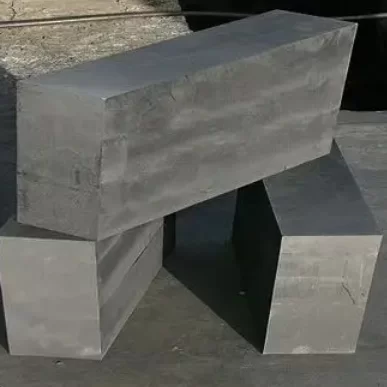
The use of engineered graphite blocks has evolved from simple liners to complex thermal management components, allowing furnaces to maintain higher temperatures with less structural degradation.
Digitalized Material Tracking
There is a rising demand for batch-specific laboratory analysis for every shipment, ensuring that the carbon content and sulfur levels are perfectly matched to the specific alloy requirements of the client.
Future Outlook
Strategic Trends in Graphite and Carbon Production
The convergence of environmental regulation and technical innovation is redefining material standards.
Energy Efficiency Drive
Optimization of graphite electrode conductivity to reduce kVA consumption per ton of steel, directly lowering the cost of electricity in the EU market.
Decarbonization of Smelting
Increasing use of high-efficiency recarburizers that reduce the time required for carbon saturation, thereby cutting down furnace emissions and energy use.
Ultra-Pure Specialization
Rising demand for synthetic graphite with purity levels exceeding 99.9% for specialized aerospace and electronic components in the high-tech German sector.
Supply Chain Diversification
Strategic shifting toward diversified global sourcing to ensure that critical materials like CPC and GPC remain available despite geopolitical shifts.
The integration of carbon materials into the circular economy is becoming a priority. This involves the development of graphite products that are not only more durable but also easier to recycle at the end of their operational life. For German foundries, this means adopting materials that produce less hazardous slag and are compatible with advanced waste-recovery systems, effectively linking metallurgical efficiency with environmental stewardship.
Furthermore, the digitalization of the material supply chain is introducing "Digital Quality Certificates." These certificates allow operators to integrate the precise chemical composition of their carbon inputs directly into their furnace control software. By automating the adjustment of feed rates based on the actual purity of the graphitized petroleum coke, plants can achieve a higher level of process stability and product uniformity.
Application Contexts
Practical Deployment in Industrial Environments
How our carbon solutions solve specific operational problems across different metallurgical sectors.
01
Automotive Casting Plant in Baden-Württemberg
A producer of high-precision ductile iron engine components struggled with microscopic porosity caused by impurity-laden recarburizers. By switching to our high-purity GPC, they eliminated trace sulfur contamination, resulting in a 15% reduction in scrap rates and ensuring compliance with OEM quality standards for critical engine parts.
02
Primary Aluminum Smelter in Northern Germany
The facility experienced unstable anode performance due to inconsistent volatility in their petroleum coke. Implementing our strictly calcined CPC ensured a uniform density in pre-baked anodes, reducing the frequency of anode effects and stabilizing the electrical current, which lowered total energy consumption per ton of aluminum.
03
Electric Arc Furnace (EAF) Steelmill in the Ruhr Area
Facing rising electricity costs, the mill required electrodes with higher current-carrying capacity. Our UHP graphite electrodes were deployed to replace standard HP versions, reducing the voltage drop at the electrode tip and significantly shortening the melting cycle, thereby increasing the total daily throughput of the furnace.
04
Industrial Boiler Foundry in Saxony
High thermal stress was causing frequent cracks in graphite linings. By installing custom-engineered graphite blocks with optimized thermal expansion coefficients, the foundry extended the lining replacement cycle, reducing maintenance downtime and improving the overall safety of the high-temperature casting process.
05
Specialty Alloy Producer for Aerospace
The producer required ultra-fine carbon inputs for powder metallurgy. Our high-grade graphite powder provided the necessary particle size distribution and purity, ensuring a homogenous carbon distribution in the alloy and meeting the strict mechanical properties required for aerospace components.
Operational Evidence
Representative Industry Perspectives
Illustrating the operational impact of switching to high-stability carbon materials.
Transitioning to high-purity graphitized petroleum coke has significantly improved our carbon recovery rates. We have observed a noticeable decrease in slag volume and a more consistent carbon level in our iron melts, which is critical for our automotive casting precision.
The stability of the calcined petroleum coke provided for our pre-baked anodes has reduced our operational volatility. The material's consistency allows for better control of the electrolysis process, leading to lower energy costs and higher anode longevity.
Switching to UHP electrodes has allowed us to increase our furnace power without risking premature electrode failure. The improved thermal stability and electrical conductivity have directly contributed to a faster melting cycle and higher daily output.
Our Legacy
Ding An Heng: Two Decades of Carbon Excellence
A journey from local production to becoming a trusted global partner for industrial graphite products.
20+ Years Ago
Foundation and Early Production
Established as a dedicated graphite production enterprise, focusing on the fundamental needs of the domestic Chinese metallurgical market with a commitment to quality.
Growth Phase
Capacity Expansion
Expanded to include two full production lines with an annual capacity of 60,000 tons, diversifying the product range to include UHP/HP/RP electrodes and advanced recarburizers.
Current Status
Global Market Integration
Now exporting high-quality carbon materials to Southeast Asia, the Middle East, Europe, and Africa, supported by a strict laboratory and quality control inspection system.

Premium Foundry Coke China Suppliers High Carbon Metallurgical Coke Factory

Carbon Gouging & Graphite Welding Rods for Sale | Wholesale

Tube Furnace Edge & Box Liner Graphite Tools | Wholesale Buy

Hard Coke Oven Plant Cost in Steel Mill Industry | Wholesale
Knowledge Base
Industrial Graphite Frequently Asked Questions
Technical answers to help you select the right carbon materials for your specific application.
What is the primary difference between graphitized and calcined petroleum coke for recarburization?
The primary difference lies in the carbon structure and purity. Calcined petroleum coke (CPC) is treated to remove volatile matter, making it ideal for aluminum anodes. Graphitized petroleum coke (GPC) undergoes an additional high-temperature process that transforms the carbon into a graphite structure, significantly increasing electrical conductivity and carbon recovery rates in steel and iron smelting. For high-precision castings, GPC is preferred due to its faster absorption and lower impurity levels.
How do UHP graphite electrodes reduce energy costs in electric arc furnaces?
Ultra-High Power (UHP) electrodes are manufactured with higher density and superior purity compared to RP or HP electrodes. This reduces the internal electrical resistance of the electrode, meaning less energy is wasted as heat within the electrode itself and more energy is delivered to the melt. This efficiency shortens the melting cycle and reduces the total kilowatt-hours (kWh) required per ton of steel, directly lowering operational costs.
Can your carbon products be customized for specific German industrial standards?
Yes. We operate a comprehensive laboratory and inspection system that allows us to tailor material properties to specific requirements. This includes adjusting the particle size distribution of graphite powder, controlling the sulfur and ash content in recarburizers, and ensuring that graphite blocks meet specific thermal expansion and mechanical strength tolerances required for European high-pressure boiler and automotive casting applications.
What is the typical lifespan of graphite blocks in high-temperature environments?
The lifespan of graphite blocks depends on the operational temperature, the chemical environment, and the mechanical stress. However, using high-density, low-porosity graphite significantly extends the life of the lining by reducing chemical erosion and thermal shock. In typical industrial furnace applications, engineered graphite blocks can last several times longer than standard carbon liners, provided that the thermal expansion is properly managed during installation.
How should calcined petroleum coke be stored to prevent oxidation in humid climates?
To prevent oxidation and moisture absorption, CPC should be stored in a cool, dry, and well-ventilated area, preferably in closed silos or moisture-proof packaging. In humid industrial environments, it is critical to avoid direct contact with the ground and to implement a First-In-First-Out (FIFO) inventory system to ensure the material is used before any significant degradation occurs. Proper storage ensures that the material maintains its low-volatile properties during charging.
What are the next steps for requesting a technical sample and quality verification?
The first step is to provide your specific material requirements, including the desired purity, grain size, and application scenario. We can then provide a technical data sheet (TDS) for the most suitable product. Following this, we can arrange for a representative sample to be sent for your internal laboratory testing. Once the material properties are verified to meet your standards, we can discuss volume requirements and supply logistics for your facility.
Contact Our Experts
Optimize Your Metallurgical Process with Premium Carbon Materials
Whether you are operating a steel mill in the Ruhr valley or an aluminum plant in Northern Germany, the right graphite solution can significantly reduce your energy costs and scrap rates. Our team is ready to provide technical consultations and tailored material specifications to meet the strict demands of the European industrial market. Let's discuss how our 20 years of expertise can support your production goals.
Discuss Your Requirements


